Not done after all

Apparently I lied when I said that I was giving up on this painting.
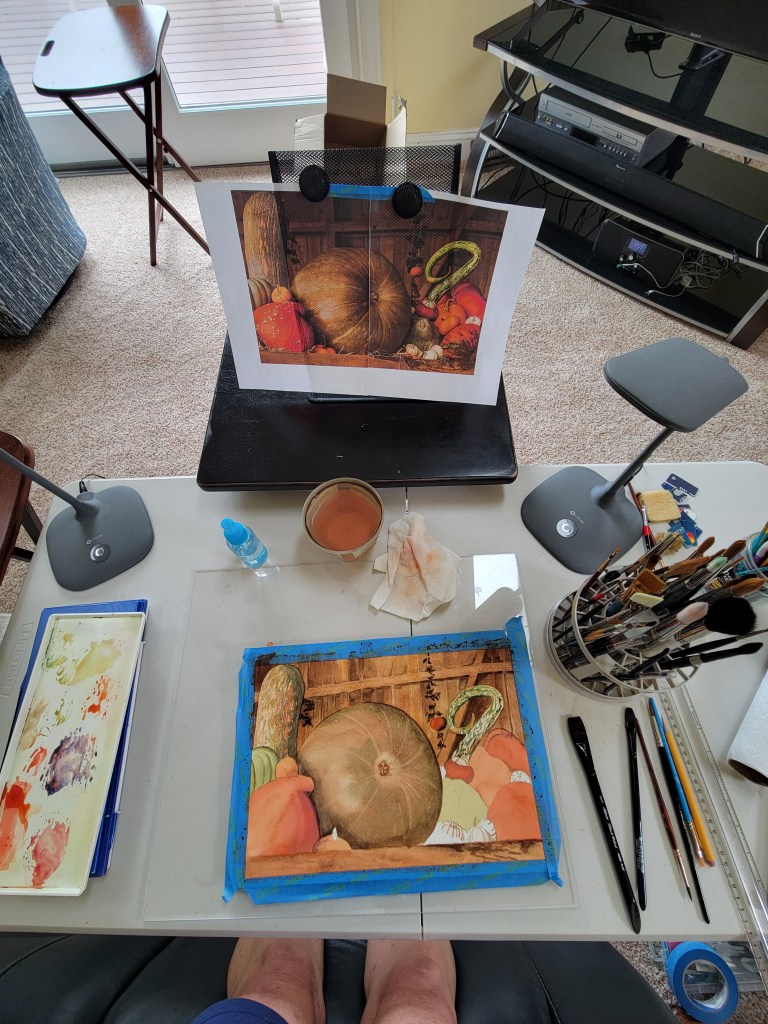
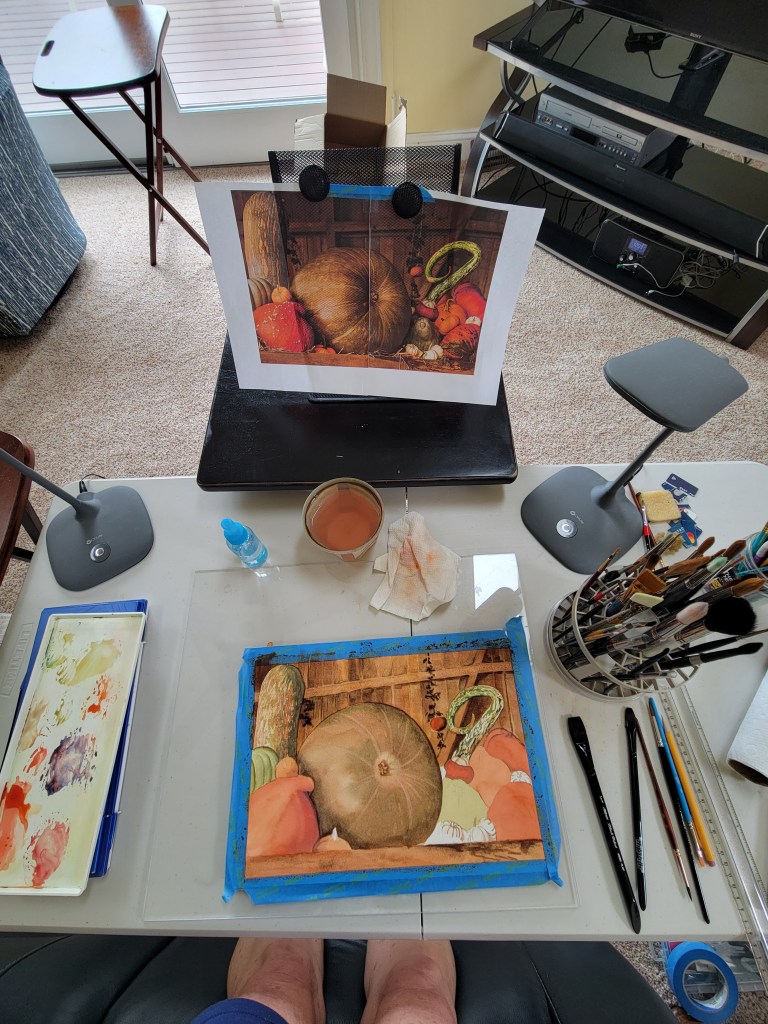
After staring at it on my painting table for a week, I broke down and decided to finish it. I was feeling guilty at wasting a perfectly good sheet of watercolor paper (that stuff isn’t cheap!)

Plus, the pumpkin painting was keeping me from tackling any new painting projects…or that’s what I told myself. (I suspect I was using it as an excuse not to start any new projects. My creative resistance is as strong as ever.)

I decided that I would not try to make this painting a masterpiece. Instead, I’d use it as an opportunity to try some new techniques. I failed at practicing new techniques, but I succeeded at not taking the painting too seriously. And I like the way it turned out.

I learned that creating attractive-looking shadows on orange objects is difficult. Consequently, I’ve decided that learning about shadows and how to paint them needs to be added to my “topics to study in depth” list.

Once I finished my pumpkin painting, I decided to focus on negative painting. Negative painting is when you paint around the outside of a subject in order to define it. It’s a particularly useful skill for watercolor painting because of watercolor’s transparency. (You can’t paint light-colored objects on top of a dark-colored background in watercolor. Instead, you have to paint around the light-colored object.)

Practicing negative painting can be a lot of fun. It takes a certain way of thinking and seeing that doesn’t come naturally to me.

This is the first negative painting I ever did, back in 2020, and it is still my favorite.

To practice my negative painting skills, I am using a course by Rick Surowicz called, not surprisingly, Negative Painting. Here is one of the exercises from the course.

I am currently working on my first official painting in the course and will post it once it’s done.
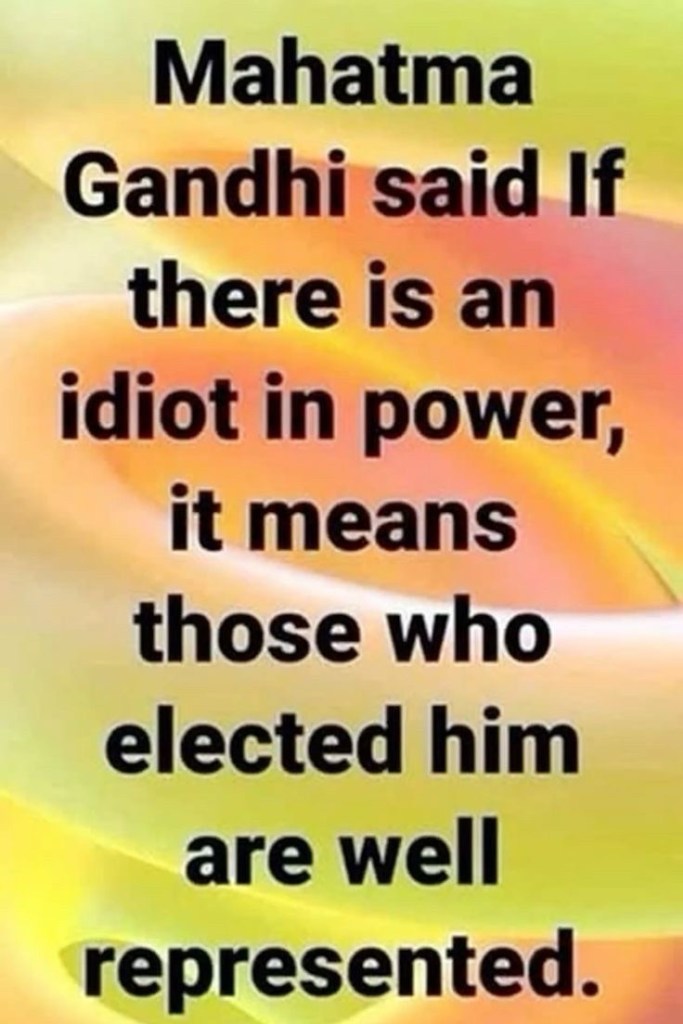
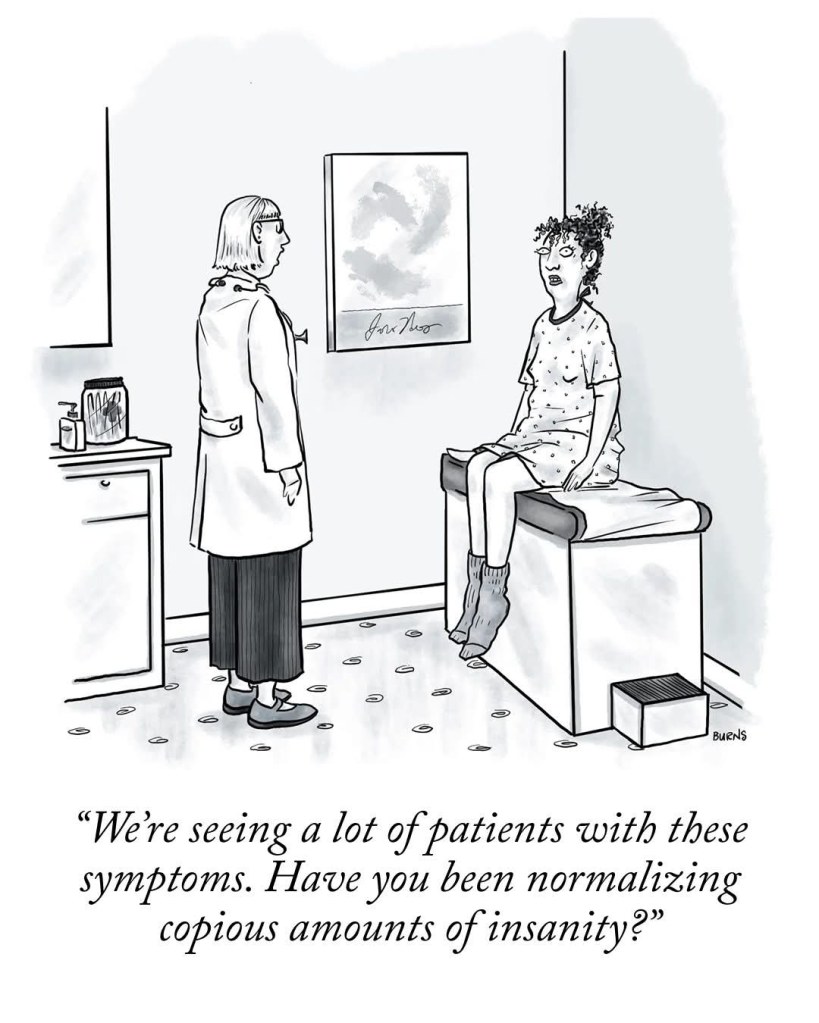
We need societal collapse

Today I’m going to write to my representatives in Congress and tell them to vote for the Big Beautiful Bill.

Why? Because the MAGA voter is hard-headed, and nothing but complete disaster is going to wake them up from their Trump-loving fever dream.

If economists and the CBO are to be believed, the Big Beautiful Bill will be devastating for the very people who voted Republicans into office. People will lose their healthcare. They’ll lose their jobs. Mortgage rates will go up. Prices for everyday items will rise. Rural hospitals will close. People will die.

A little bit of pain isn’t going to be enough. The MAGA base is really good at giving Trump a pass on every nutty thing he says and does. No, it needs to be total devastation, which, given enough time, the provisions of this bill should accomplish.

The Big Beautiful Bill probably won’t be enough to make them reconsider their membership in the MAGA cult, though. Therefore, I think it’s important for Republicans to retain control of the House and Senate in 2026.

We need four full years of unfettered GOP control and all the insanity that goes along with it. Maybe then MAGA voters will finally wake up and realize that voting for a monumentally corrupt TV personality and a bunch of corporate billionaires wasn’t the best move.

With that in mind, I’m thinking of voting for Republicans in 2026 — at least for all of the federal offices on the ballot.

Four full years of GOP control might be enough to wake people up. (I’m not counting on it. We seem to be a nation of complete idiots.)

Of course, after four years of Trump and the Heritage Foundation doing everything they can to turn America into an oppressive white supremacist theocracy, America as a democratic republic will be well and truly over.

But maybe you need to lose something in order to learn how much you value it.

What do I value?

The more social media I consume, the more confused I become.

Democrats seem to be all over the board these days. Liberal voters around the country are criticizing Democratic politicians for being ineffectual and/or too mainstream establishment. Traditional left-leaning media is criticizing politicians and voters alike for being either too extreme or flat-out wrong. And liberals on social media are fighting amongst themselves over the best ways to resist creeping authoritarianism.

I finally realized that I was in danger of becoming a leftist sheeple — in other words, someone who emotionally reacts to every outrage du jour even when it conflicts with a previous outrage du jour, simply because one of “my people” said it.

In an effort to ground myself, I decided that I needed to determine what I actually believe in and articulate it to myself at the very least.

It turned out not to be all that hard.

First of all, I believe in freedom. I believe that every person should be free to live their lives in whatever way they choose without interference from me or the government, as long as their choices aren’t harmful to others and don’t impinge on someone else’s freedom.

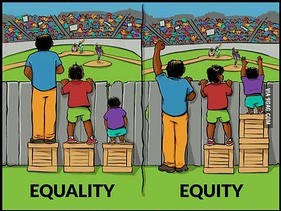
And second, I believe in equity.

Not all of us are created equal. Some of us have significantly greater challenges in life than others, and I don’t think those challenges should prevent people from having an opportunity to lead successful lives. Equity occurs when everyone gets whatever support they need from the government so that they can have an equal chance at success as everybody else.

Third, I believe in equal justice. Laws should be fair. They shouldn’t discriminate against one group of people or benefit another. And they should be evenly enforced.

And finally, I believe everyone deserves due process. If you are in the United States and are accused of a crime, regardless of your citizenship status, you should have the right to legal representation and to defend yourself in court (or the equivalent).

These are the principles I believe in. Would you add or change anything?

P.S. I also believe that I need to rely on facts when determining whether our government is violating any of the above four principles.

Creative ennui

I am in a creative slump.

I’ve reached the point where my painting skills have developed enough that I can fairly accurately recreate any photograph in watercolor. For a long time, that has been enough to satisfy me.

But now it seems pointless. Making exact copies of beautiful photographs is not making art. It’s a useful practice for building skills, but I think I’ve outgrown it.

It’s time to figure out how to make the transition from copying to creating.

This painting is not quite half done, and I became bored with it before I had even put the first stroke of color on the paper. After struggling to make progress on it for nearly a week, I’ve decided to abandon it. I paint for pleasure, and this painting was creating more pain than pleasure.

So what now?

I’m not entirely sure. I’ve been struggling with how to become more creative with my painting for at least a year, and I haven’t figure it out yet. It’s so freaking frustrating!

Here are some of the things I’m considering trying while I wait for a breakthrough:

  1. Practice specific skills, such as painting shadows or different textures.
  2. Work on improving my color choices and combinations.
  3. Combine elements from various reference photos to create my own compositions. This would make it impossible for me to rely too heavily on a reference photo’s composition and color scheme.
  4. Play with a new style, such as abstract.
  5. Practice painting specific subjects, such as florals, rocks, or water (e.g. 30 mushrooms in 30 days).
  6. Complete some of the online painting classes that I have already purchased.
  7. Try a new medium, such as gouache.

Have you ever been in a creative slump, and if so, how have you broken out of it?