
On Thursday, we started our day at Norris Geyser Basin. First, we did the Porcelain Basin Loop, which was incredible. The landscape was like something out of a science fiction movie. Everywhere you looked, there was steam rising from the ground.

Boiling water from the steam vents and geysers runs along the ground. Bacteria that is able to survive in high temperatures grow in the water, creating colorful rivers of orange, rust, blue, and bright green. These are called bacterial mats.
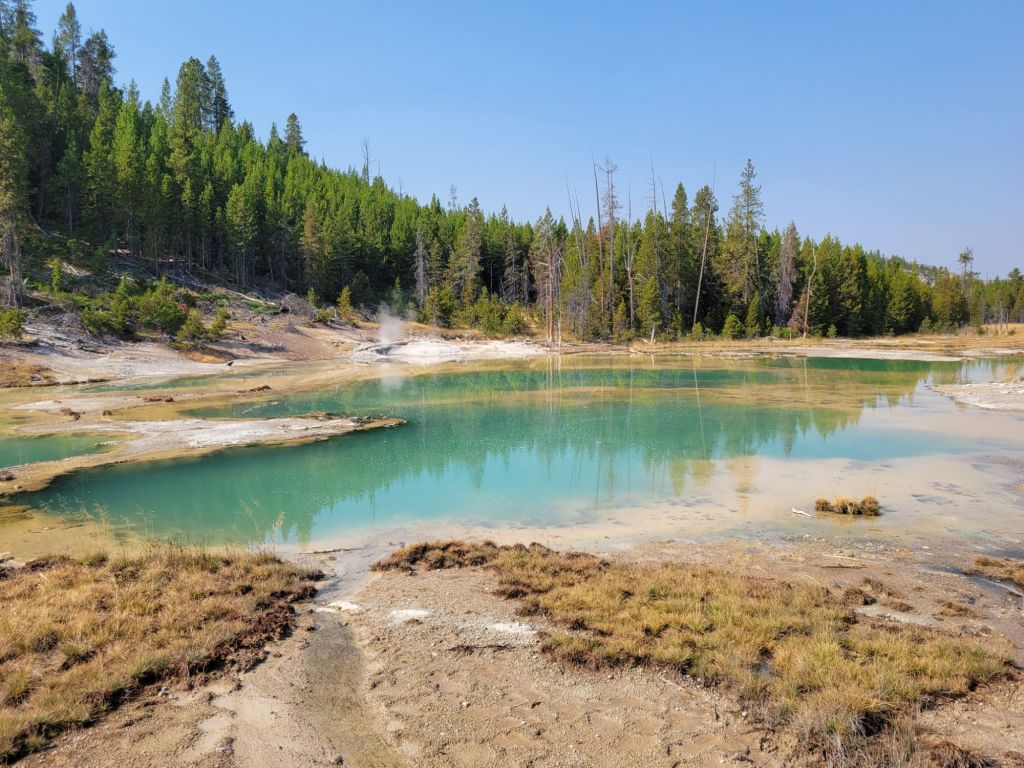
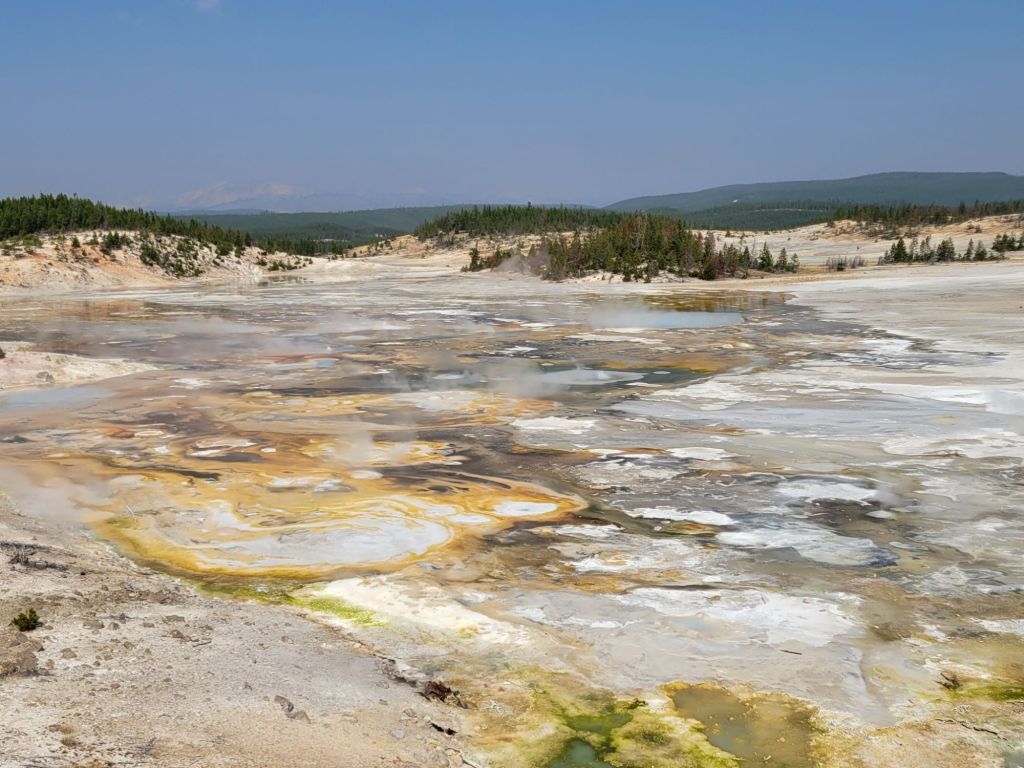
A white crust forms around the edges of the steam vents and geysers. It is called siliceous sinter (although every time I tried to recall the name at first, all I could come up with was “seditious sphincter”).

Before we came, I knew that Yellowstone National Park was basically a dormant super volcano, but I didn’t realize how much of the park is still thermally active.
As we’ve traveled around the park, I’ve come to appreciate the fact that several miles below my feet, a giant volcano lies waiting.
Norris Geyser Basin – Back Basin
The Back Basin Loop was a bit of a disappointment after the Porcelain Loop. There were still plenty of geysers (like the one below) steam vents, and bacterial mats, but it didn’t have the same science fiction feel.
After we finished at Norris Geyser Basin, we found a picnic spot and had lunch sitting by the Gibbon River.
One of the great things I’ve discovered about Yellowstone National Park is all of the truly lovely picnic spots.

Artists Paintpots
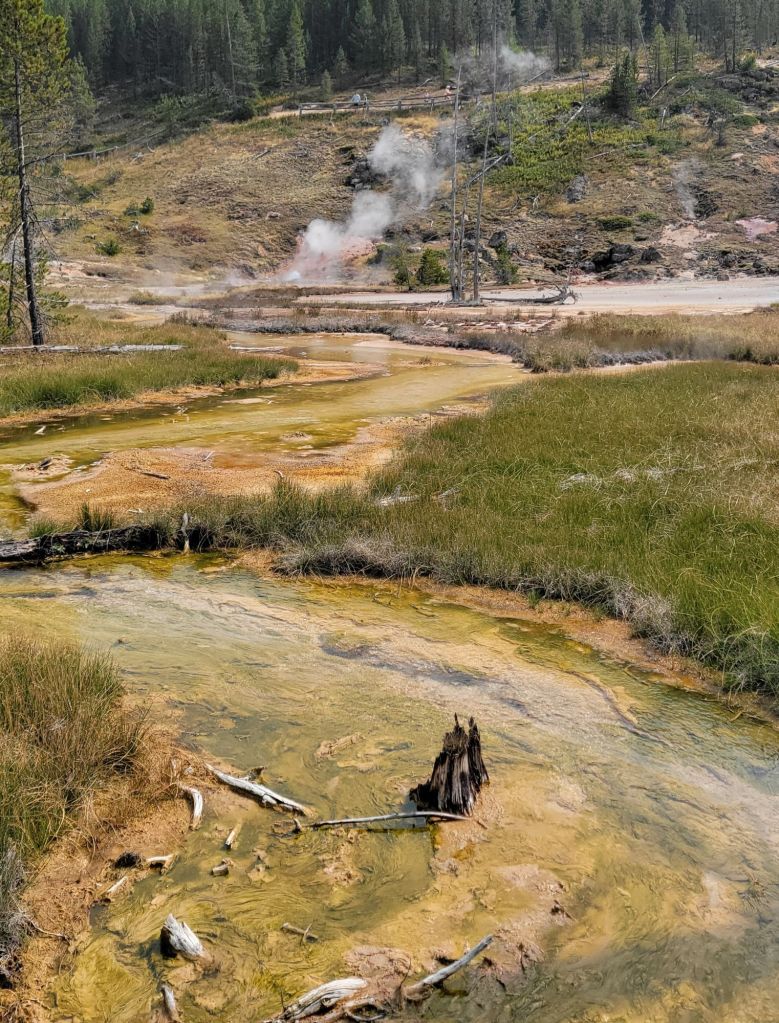
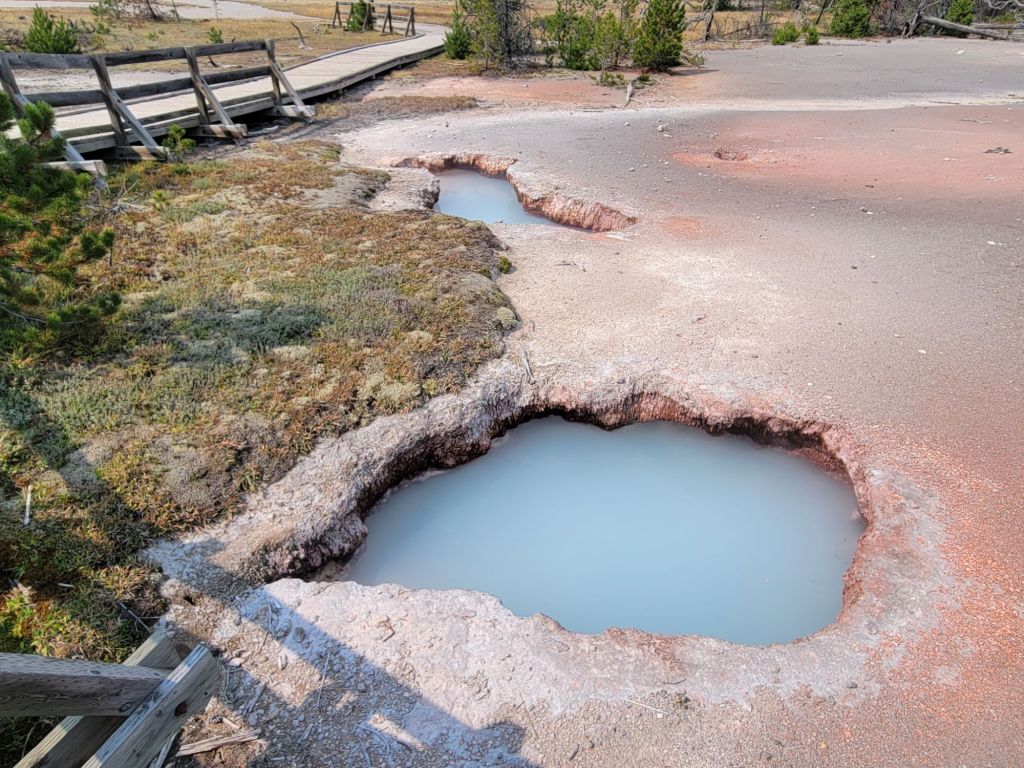
After lunch, we headed to Artists Paintpots, another area with geysers, steam vents, and even some mudpots.
Gibbon Falls
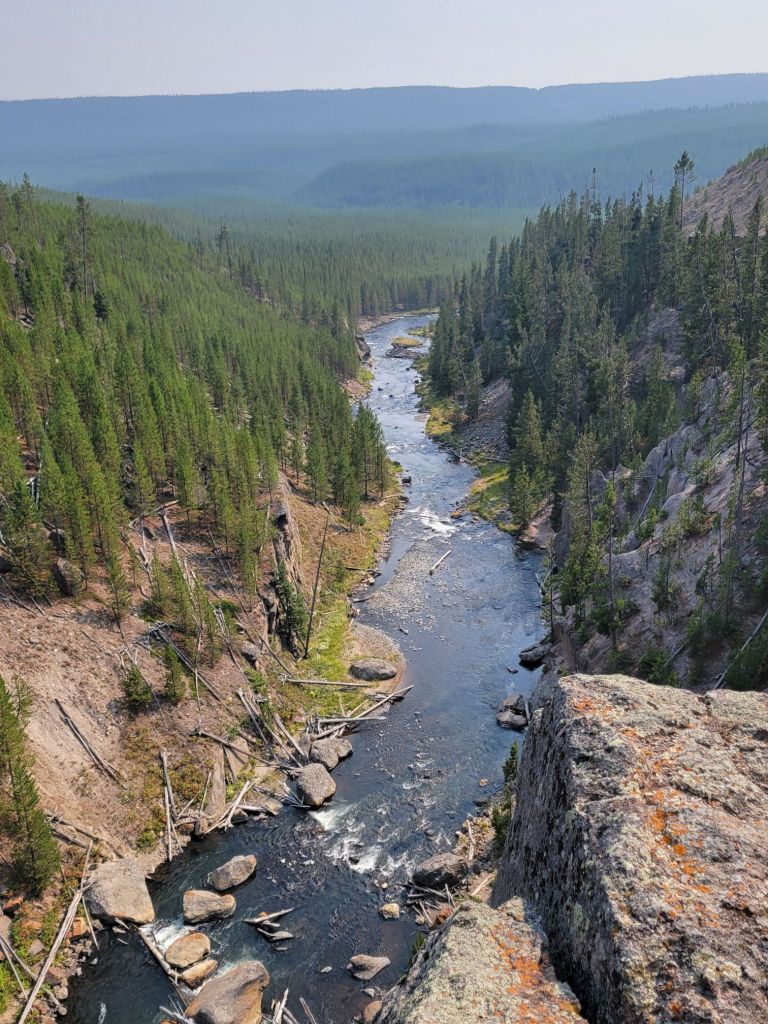
On our way back to the campground, we stopped at Gibbon Falls. Again, this is another site where pictures simply cannot do it justice.

 Meanderings & Mind Munchies