Mammoth Hot Springs

On Monday, we headed to Mammoth Hot Springs. Since it is a good distance from where we are staying in West Yellowstone, we had another early start.

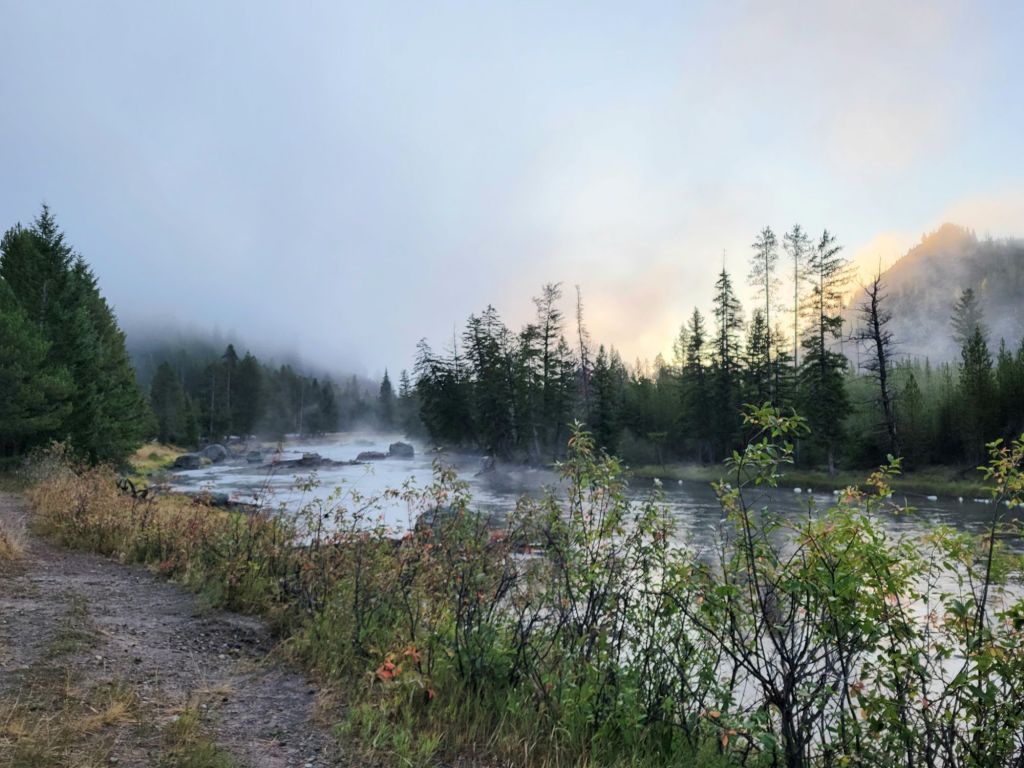
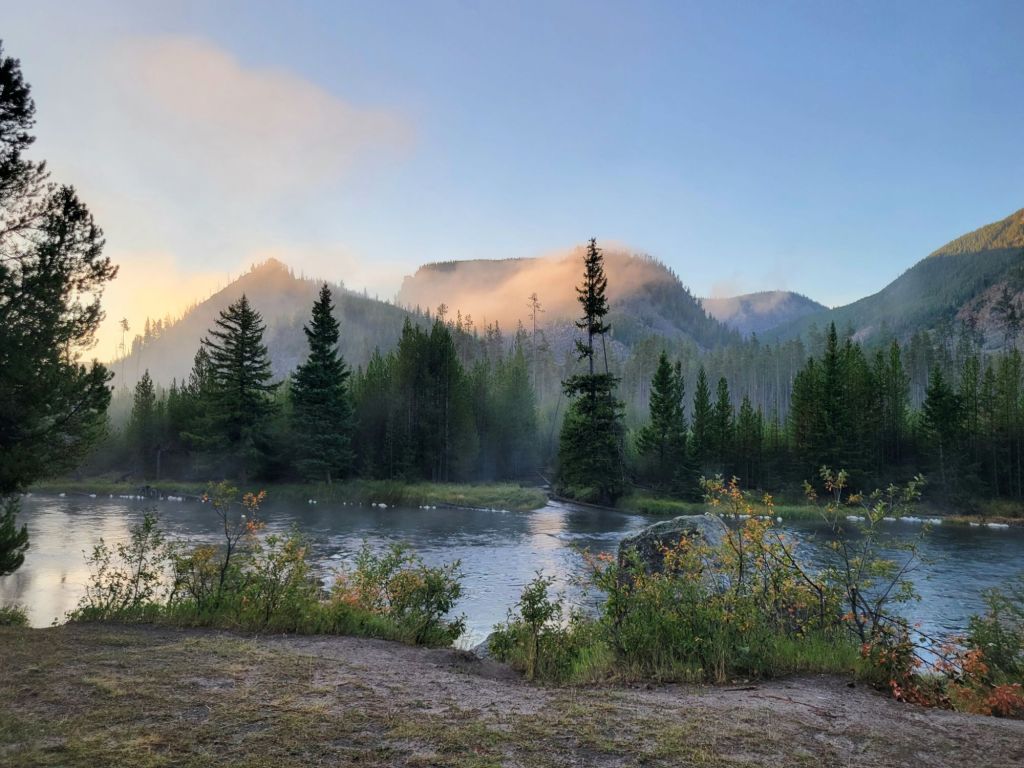
That meant I got to enjoy another foggy morning! Who knew I would find fog so enthralling?

I’m pretty sure that this is fog, but it may have been drifting steam from one of the hot springs in the area.

By the time we arrived in Mammoth Hot Springs, the geography had changed dramatically! It was no less beautiful, though.

Our first stop was the visitor center. This bull elk was hanging out on the lawn in front of the visitor center, bugling for his does.
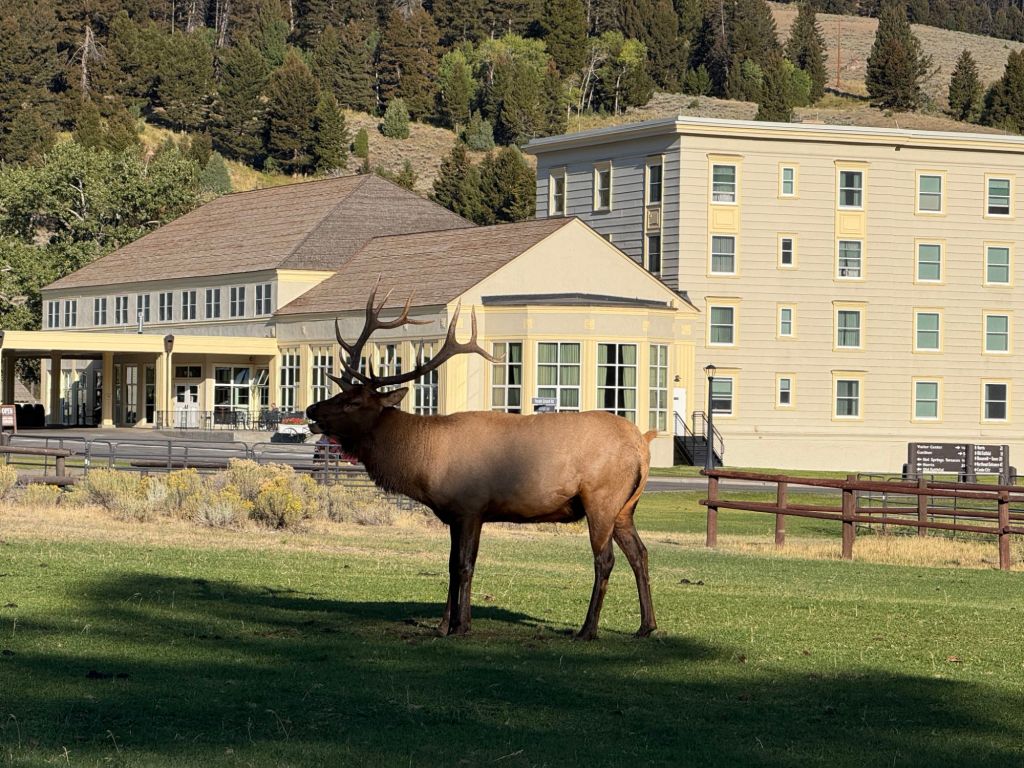
When we first arrived, he was lying down. I think he finally got tired of waiting for the does to show up, so he stood up and started hollering for them.

The photo below shows Mammoth Hot Springs from a distance. All that white is siliceous sinter, otherwise known as geyserite. To me, it looks like a mound of dirty snow.
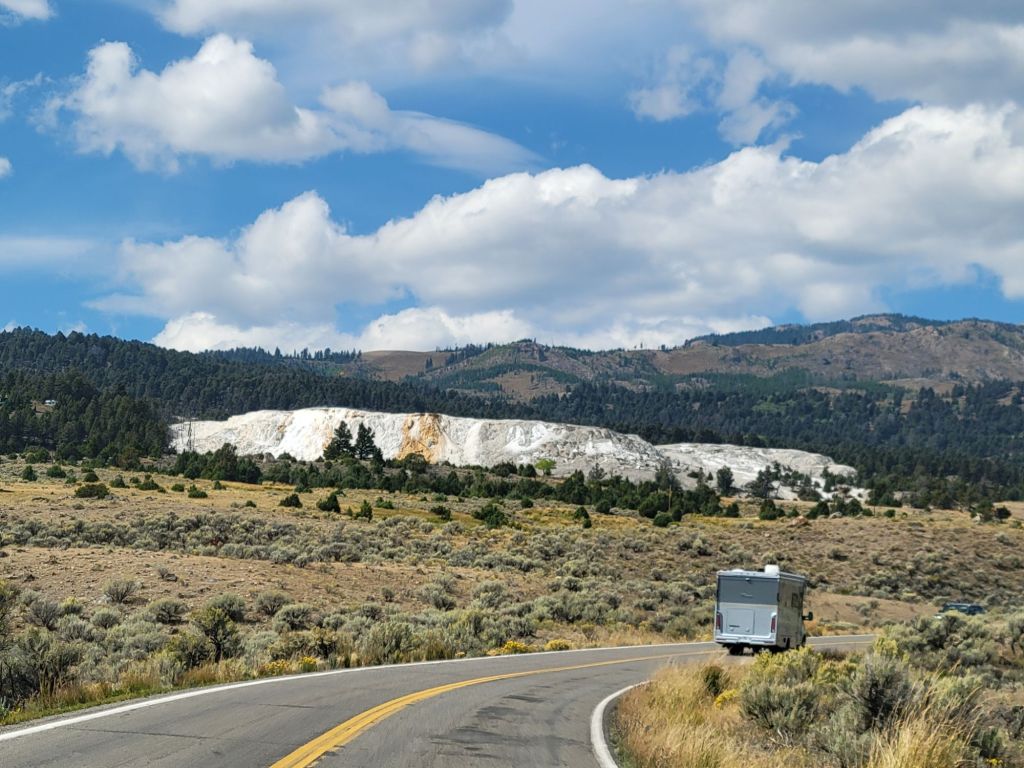
And this is what it looks like close up.
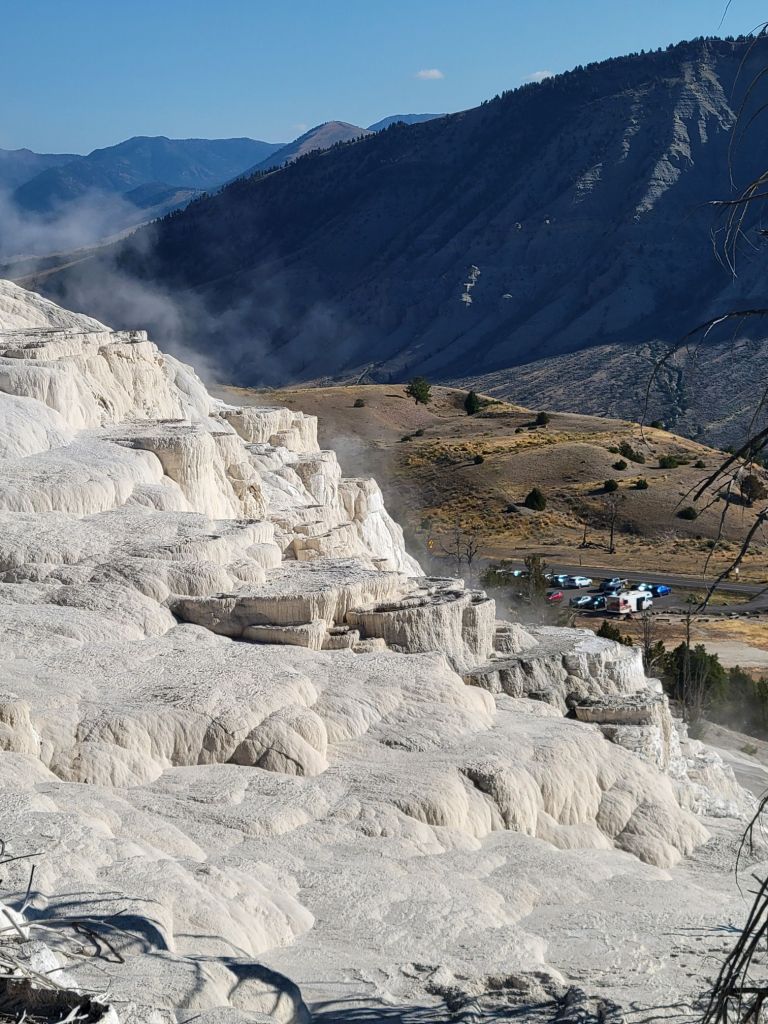
We started by driving through the Upper Terrace before parking the car and walking the boardwalk of the Lower Terrace.

This pile of geyserite is still venting steam, although it is a little hard to see from this photo.

The formation shown in the photo below is what makes Mammoth Hot Springs unique. These are called travertine terraces.

This is what they look like close up.
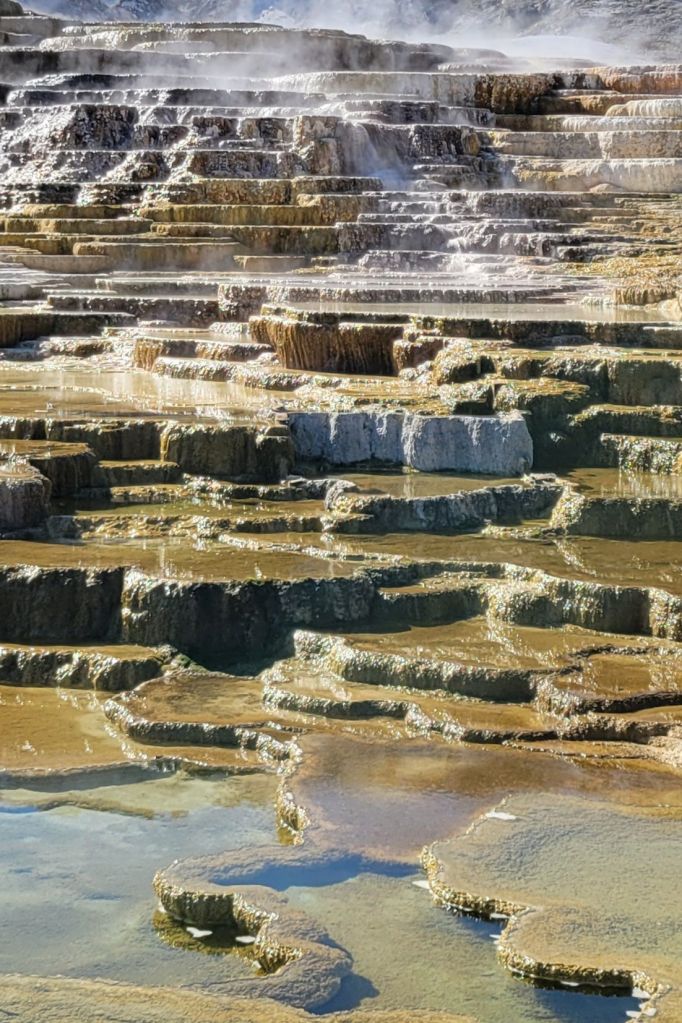
And from further away.

After leaving Mammoth Hot Springs

We did so much after leaving Mammoth Hot Springs that I’m going to post the photos with captions and leave it at that.
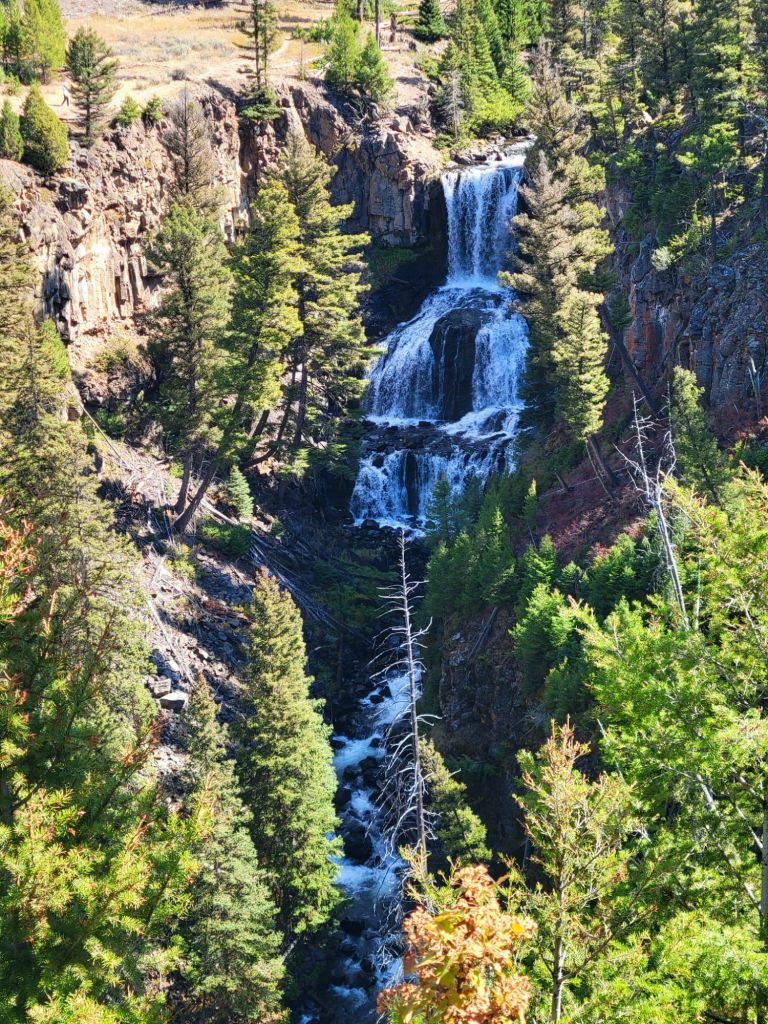
Undine Falls
Another picnic lunch
A hike to Wraith Falls. I enjoyed the 1/2-mile hike significantly more than I enjoyed the falls!
Wraith Falls
The Golden Gate (the names for things here are really weird)
Obsidian Cliff. I have a close-up of the cliff, but I liked this photo better.
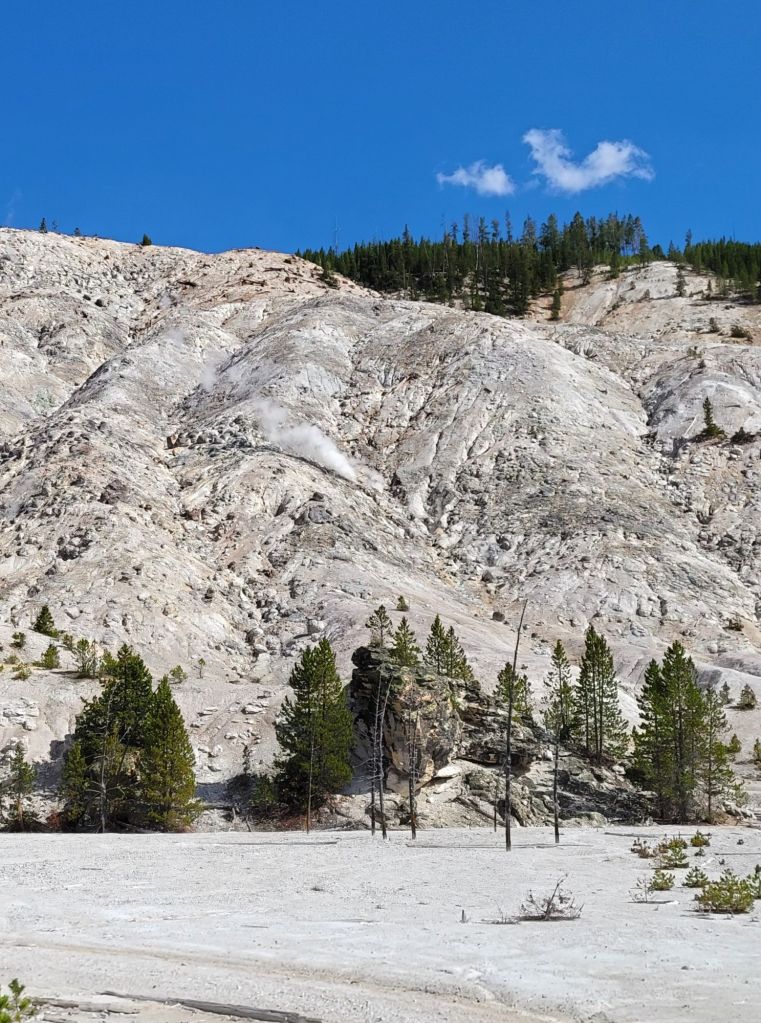
Roaring Mountain. I will never get over geysers and steam vents coming out of mountains.
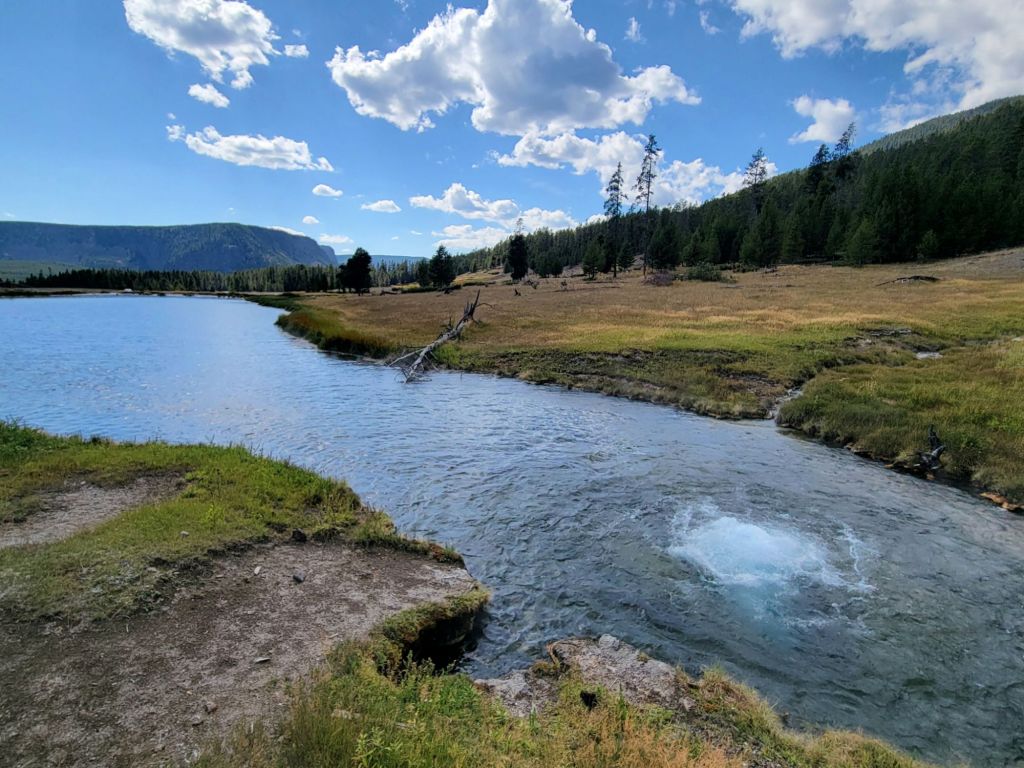
Terrace Springs. In the morning, the steam rising off the water is an impressive sight.
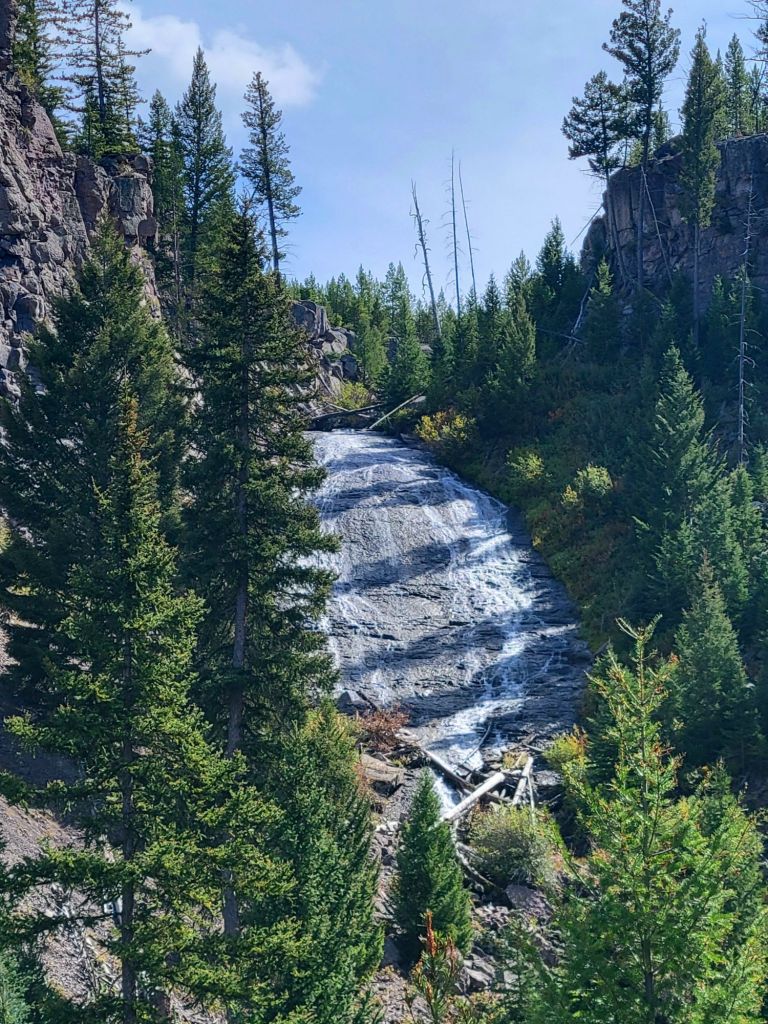
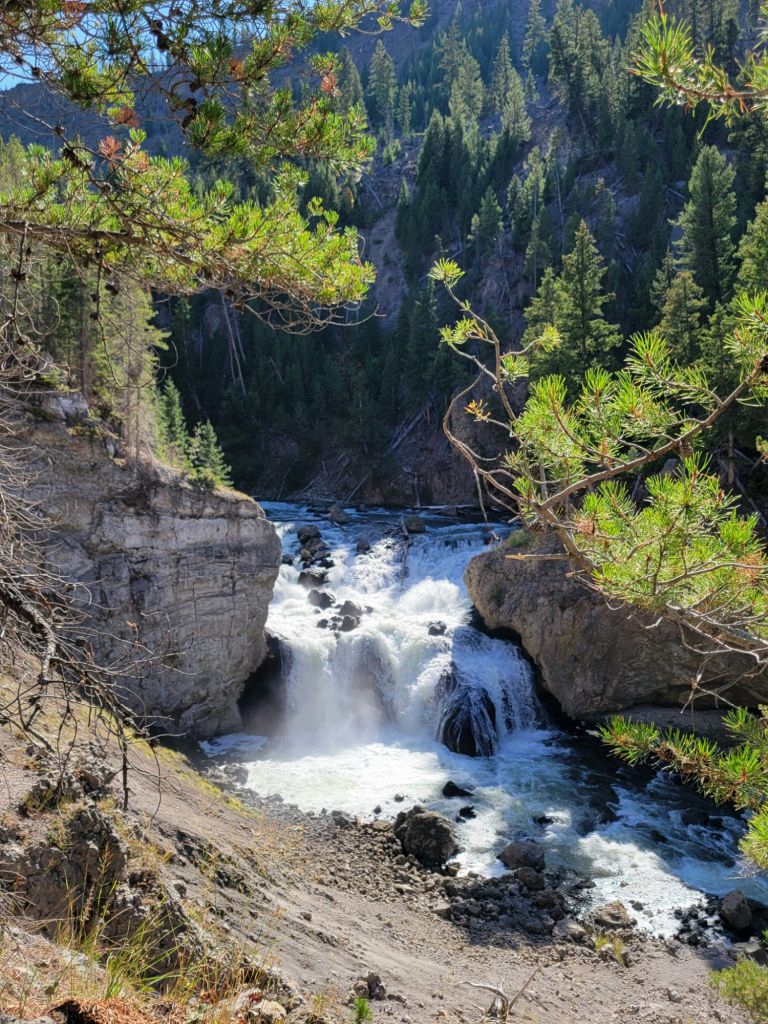
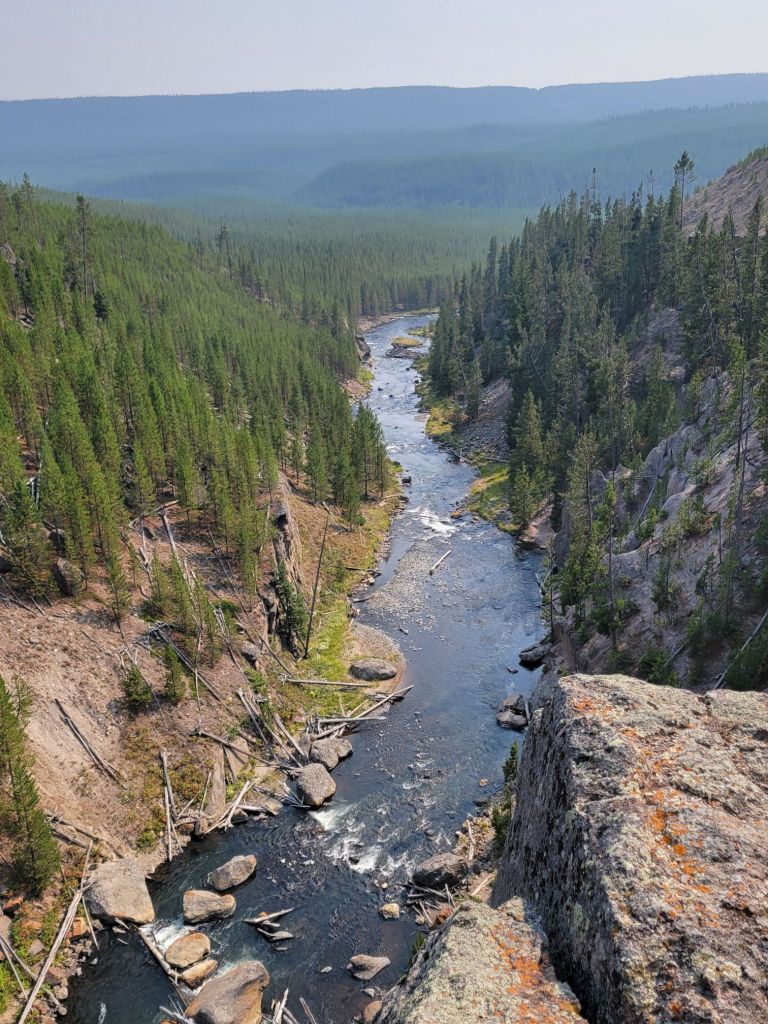
Firehole Falls, accessed via Firehole Canyon Drive.
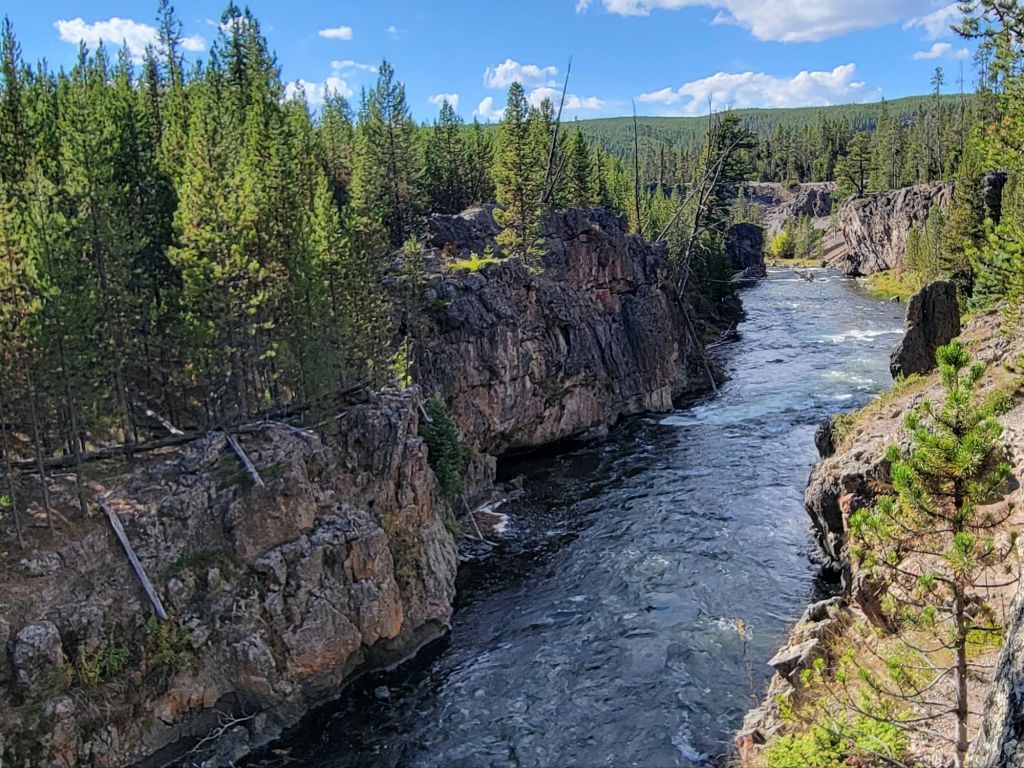
Looking in the other direction from Firehole Falls. (Firehole Canyon Drive had some truly impressive views. Unfortunately, there was no place to pull over and take photos.)
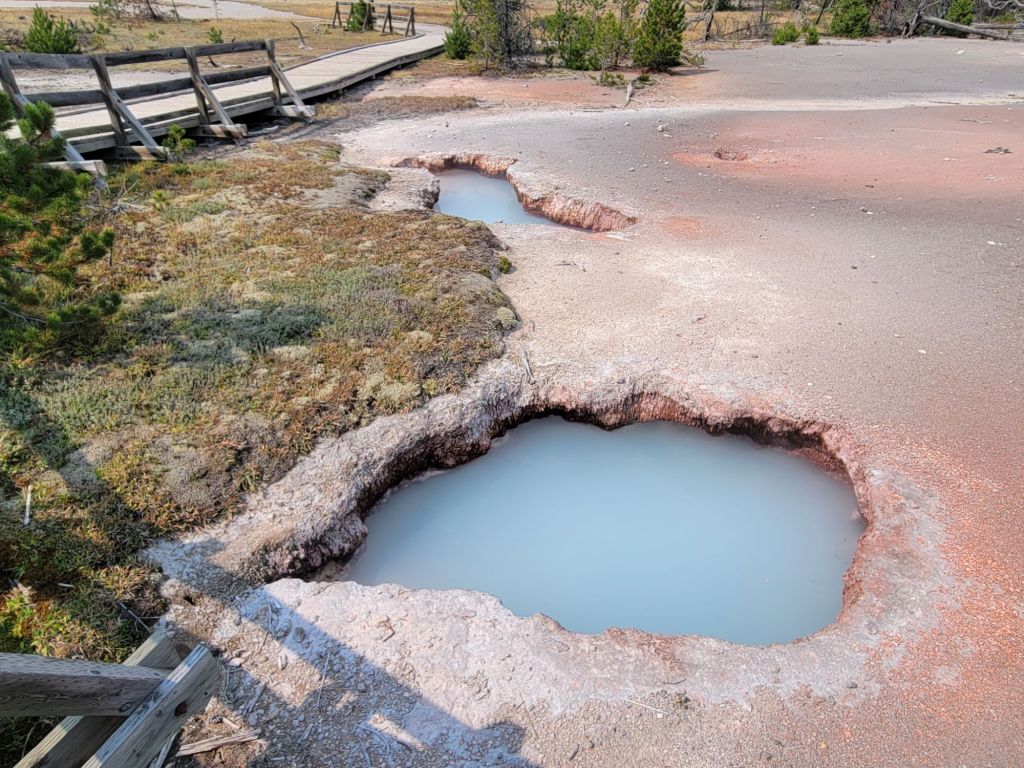
Fountain Paintpots. This geyser was the most active one I’ve seen so far.
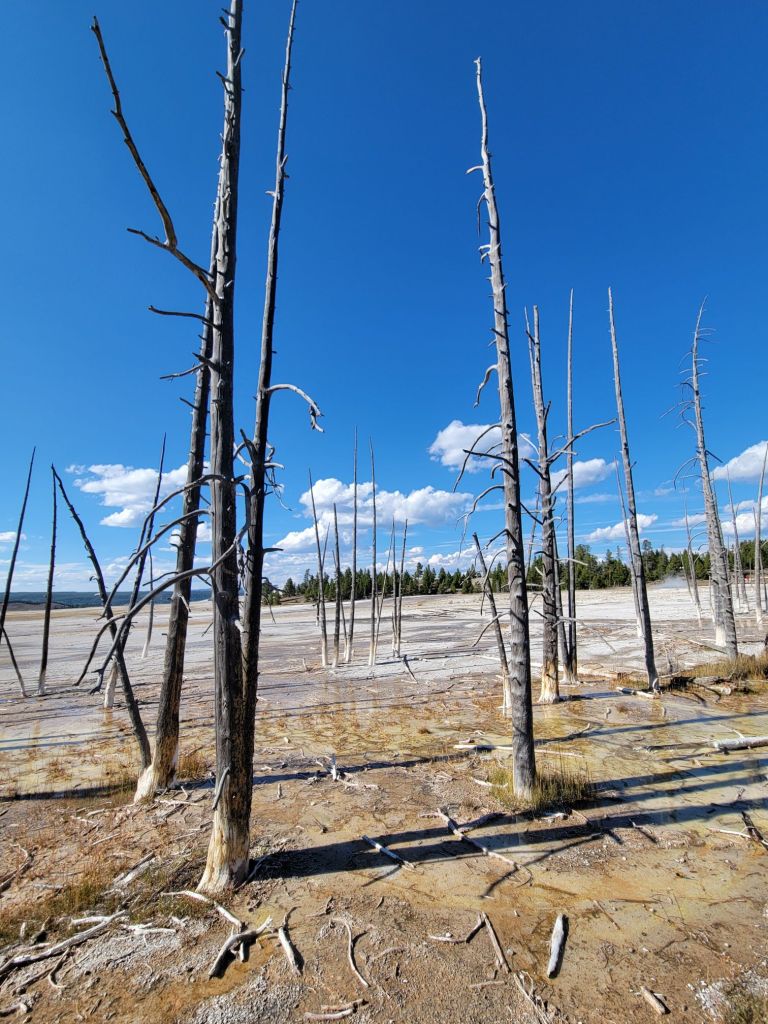
This is what happens to lodgepole pines when they are immersed in the runoff from geysers.

On our way back to the campground, we experienced our first true bison traffic jam. The park rangers eventually showed up to scare the bison off the road.
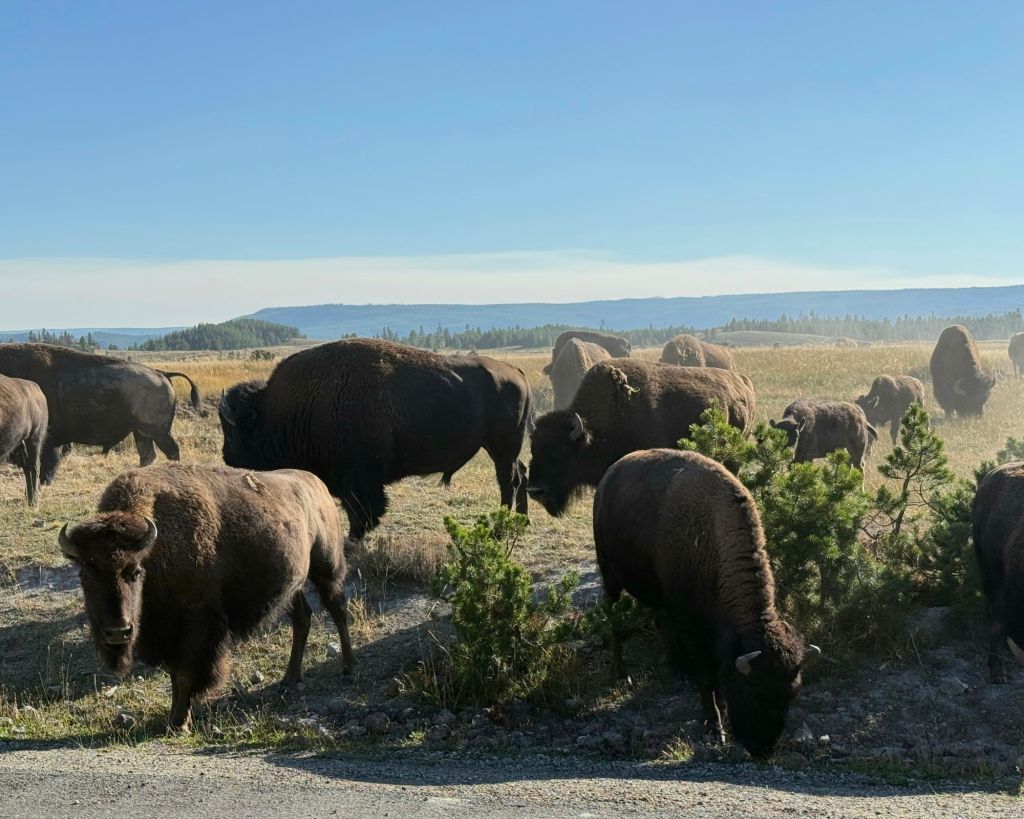
There’s always at least one idiot in the crowd…
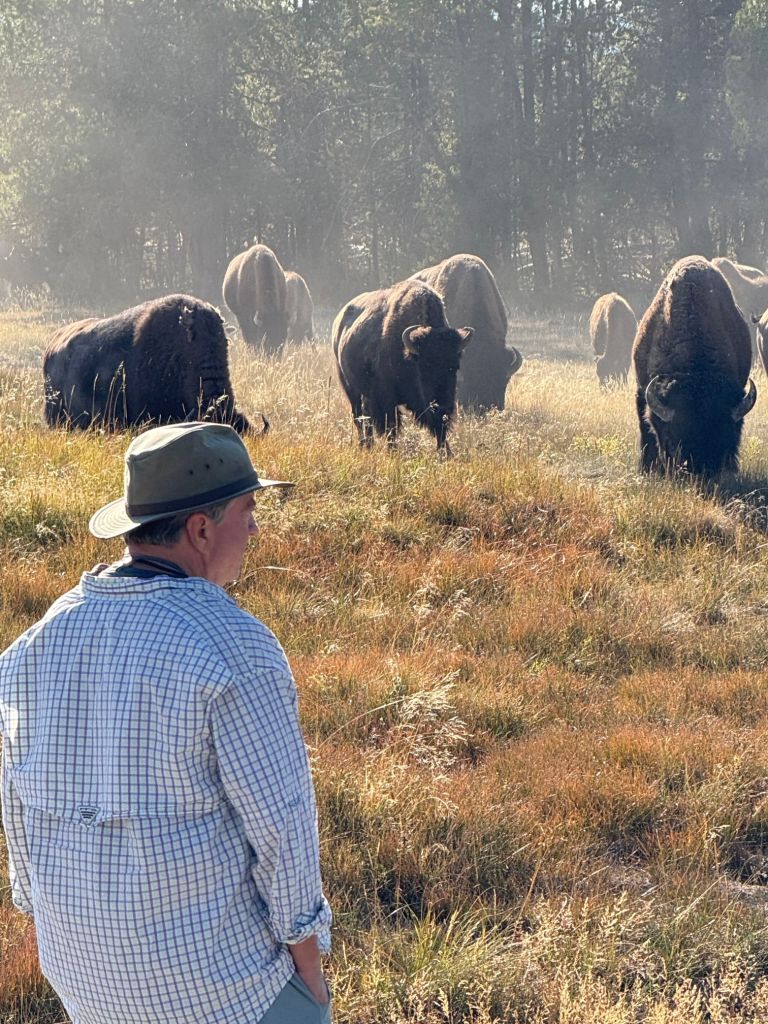
It was a great day, at least for me.

By the time we arrived back at our campsite, Greg’s normal equanimity was experiencing some tatters around the edges. Between the stress of driving on winding narrow mountain roads, walking thousands of steps, and sightseeing, he was exhausted. (I think he has also had his fill of geysers, hot springs, and steam vents to last a lifetime.)

Tuesday will be a less intense day.

Norris Geyser Basin – Porcelain Basin

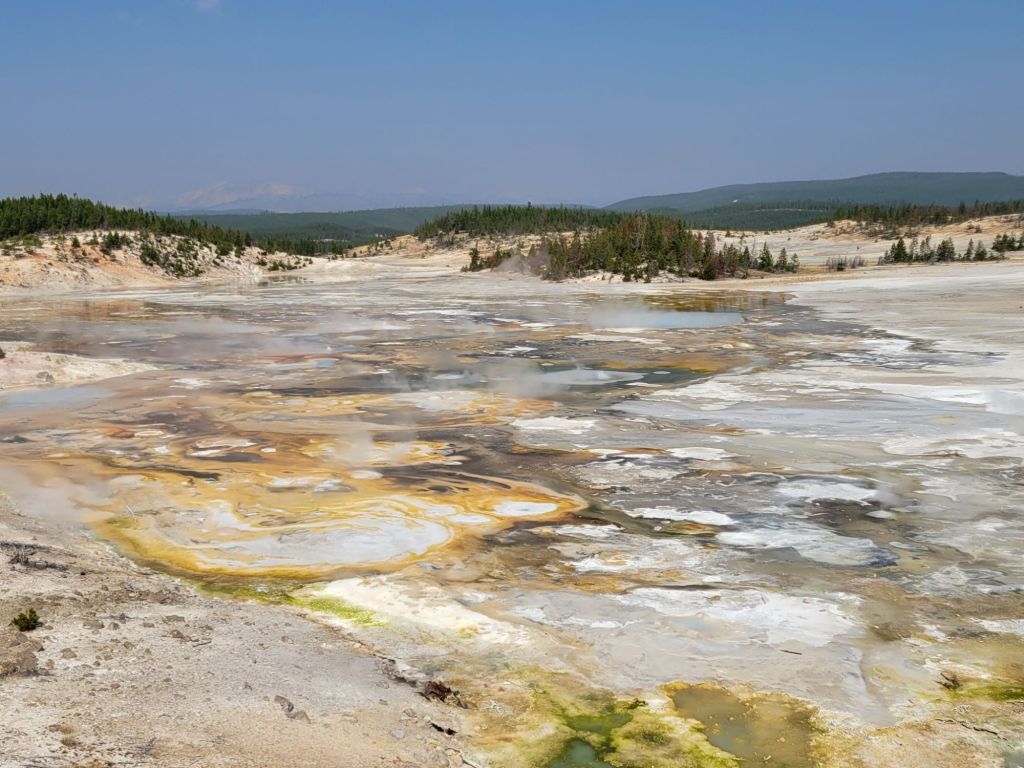
On Thursday, we started our day at Norris Geyser Basin. First, we did the Porcelain Basin Loop, which was incredible. The landscape was like something out of a science fiction movie. Everywhere you looked, there was steam rising from the ground.

Boiling water from the steam vents and geysers runs along the ground. Bacteria that is able to survive in high temperatures grow in the water, creating colorful rivers of orange, rust, blue, and bright green. These are called bacterial mats.

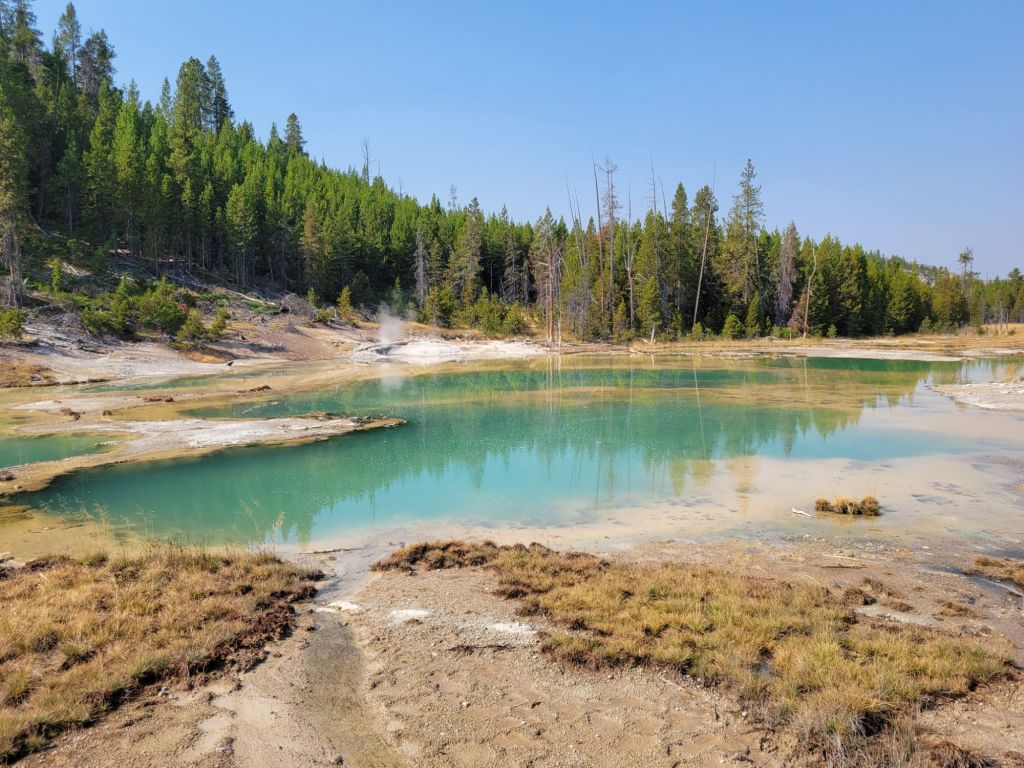
Hot Springs are everywhere. The water is blue or green, but the outer edges are often bright red or orange from the bacteria that grows there.

A white crust forms around the edges of the steam vents and geysers. It is called siliceous sinter (although every time I tried to recall the name at first, all I could come up with was “seditious sphincter”).

Before we came, I knew that Yellowstone National Park was basically a dormant super volcano, but I didn’t realize how much of the park is still thermally active.

As we’ve traveled around the park, I’ve come to appreciate the fact that several miles below my feet, a giant volcano lies waiting.

Norris Geyser Basin – Back Basin

The Back Basin Loop was a bit of a disappointment after the Porcelain Loop. There were still plenty of geysers (like the one below) steam vents, and bacterial mats, but it didn’t have the same science fiction feel.

After we finished at Norris Geyser Basin, we found a picnic spot and had lunch sitting by the Gibbon River.

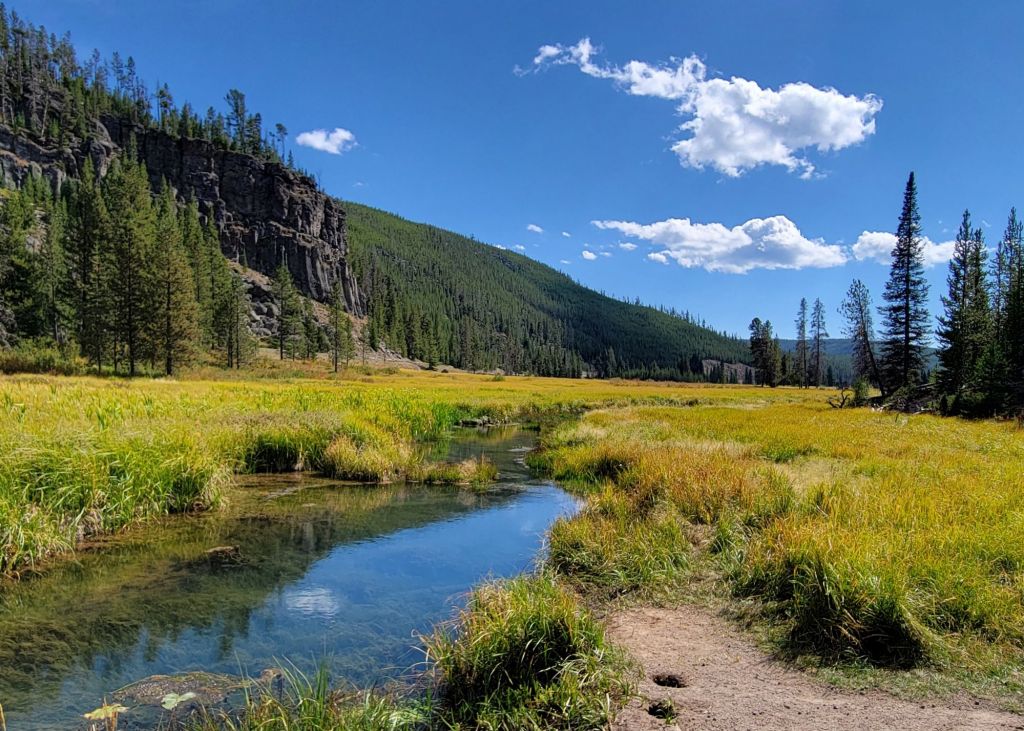
One of the great things I’ve discovered about Yellowstone National Park is all of the truly lovely picnic spots.

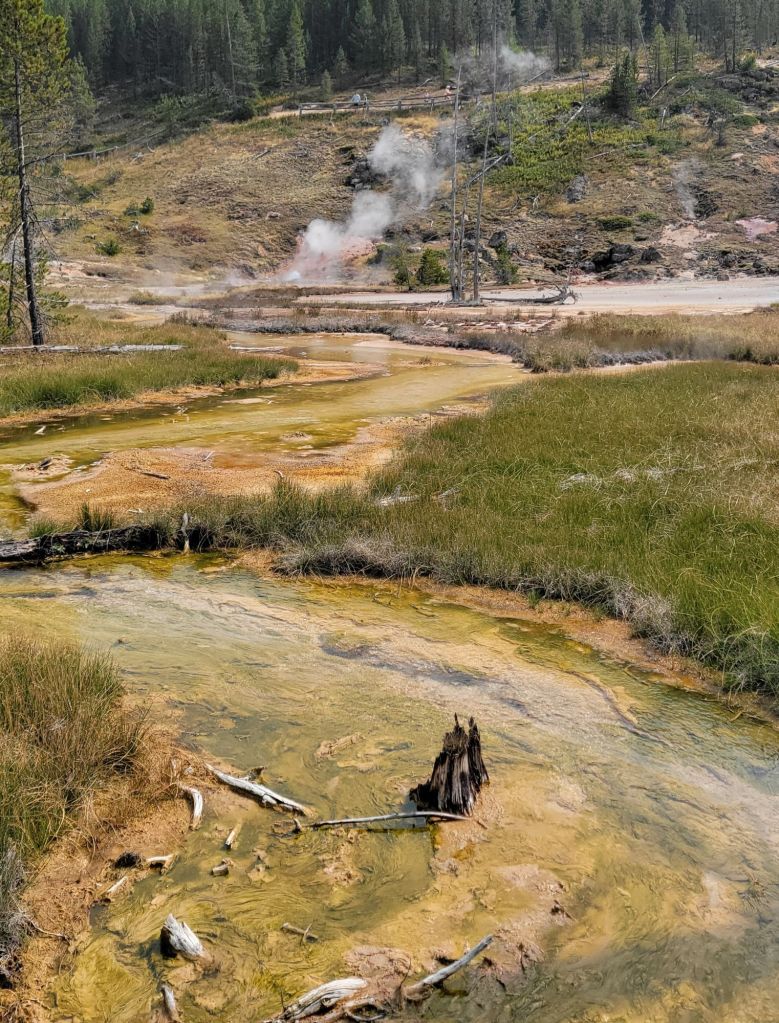
Artists Paintpots

After lunch, we headed to Artists Paintpots, another area with geysers, steam vents, and even some mudpots.

Gibbon Falls

On our way back to the campground, we stopped at Gibbon Falls. Again, this is another site where pictures simply cannot do it justice.