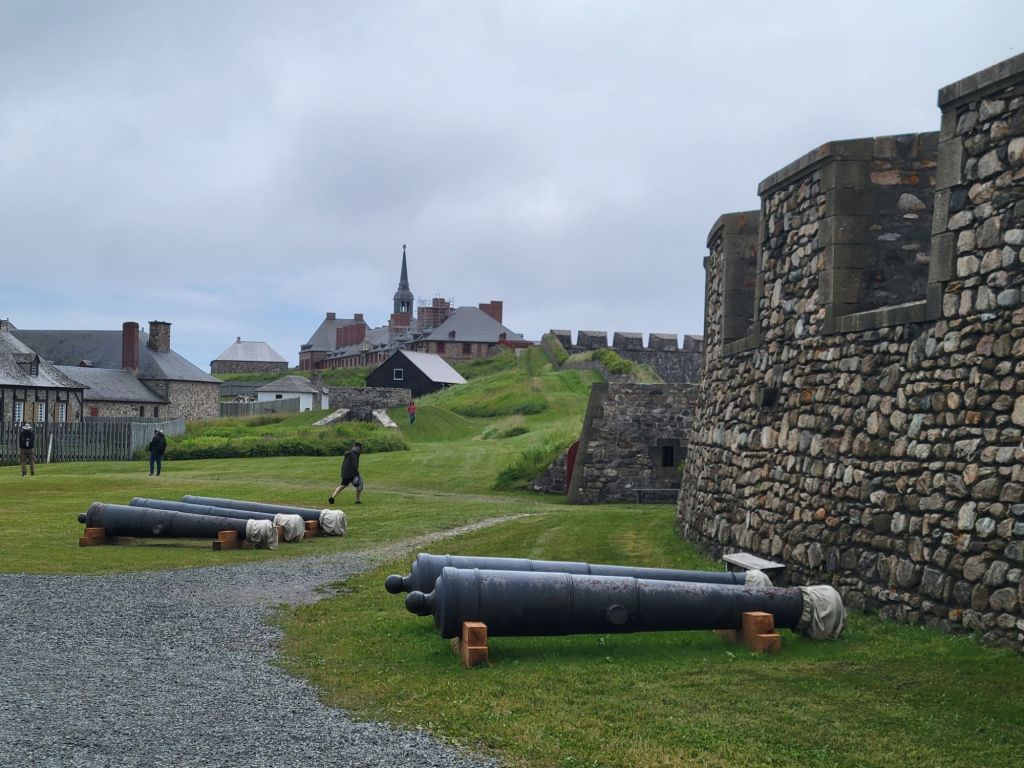
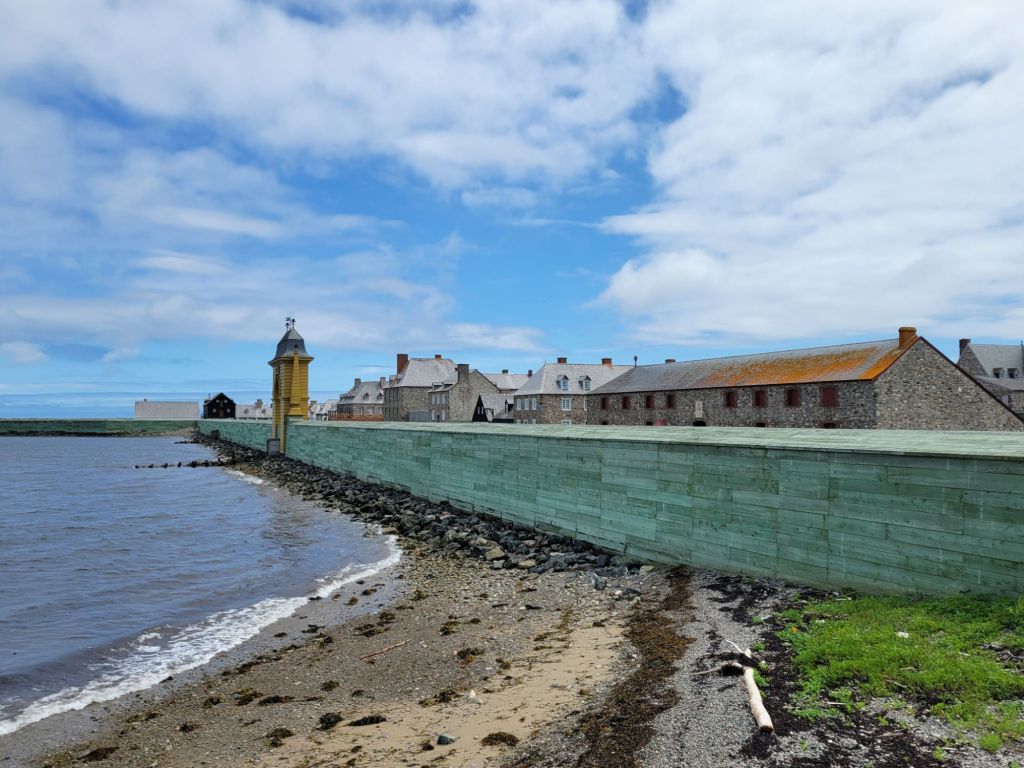
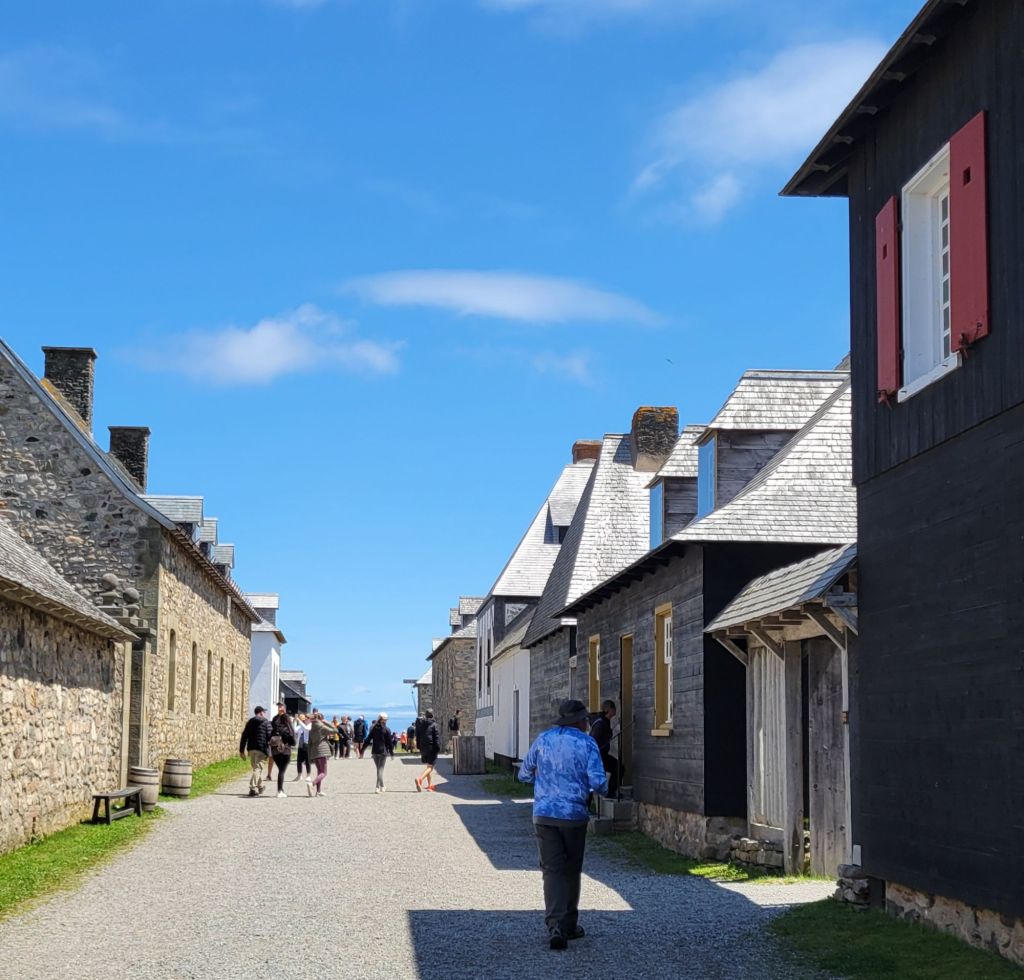
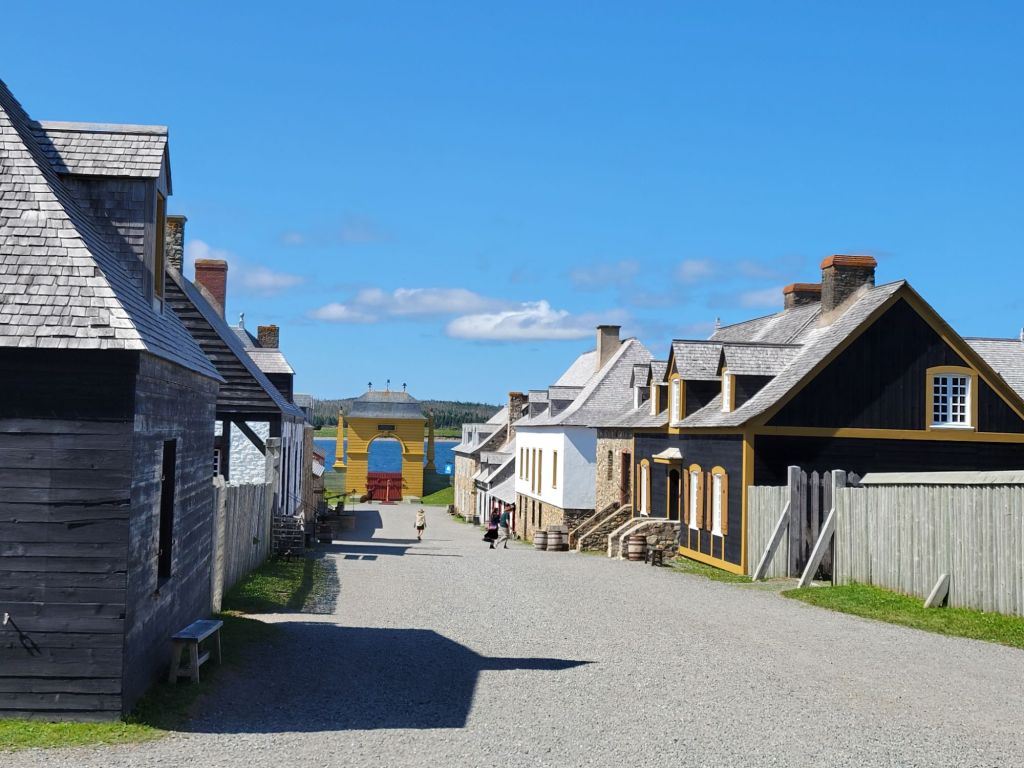
Today we took a tour of the Fortress of Louisbourg. I thought the weather was going to let us down again, but it eventually turned into an absolutely gorgeous day.
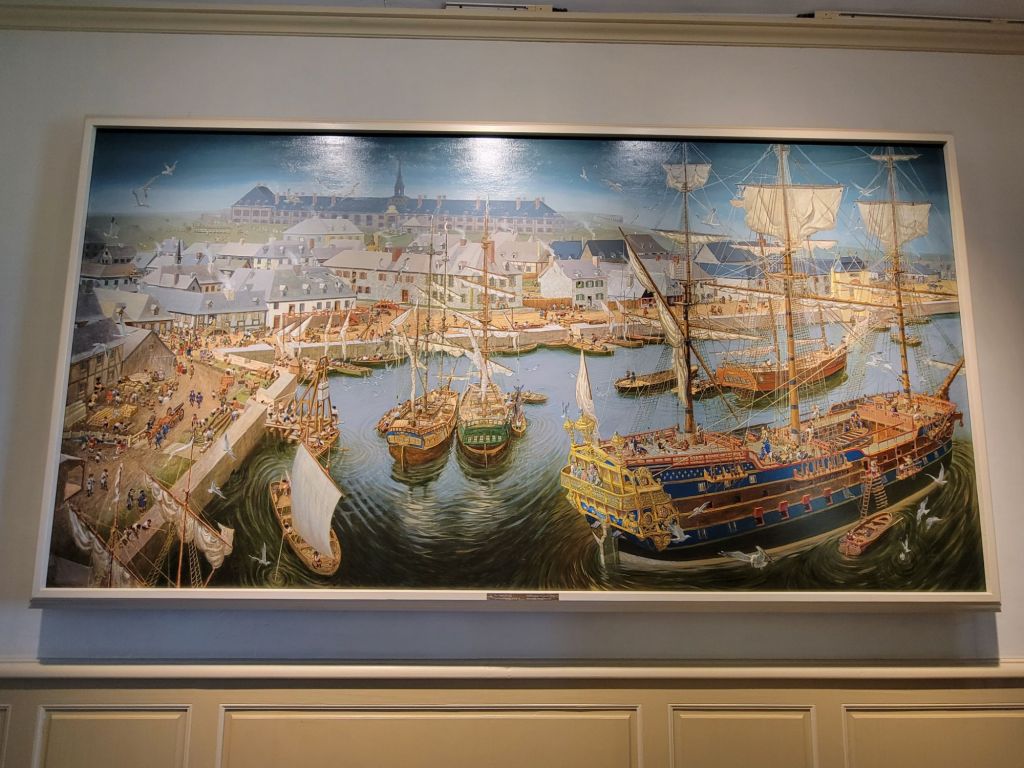
Fort Louisbourg was a French fishing colony that produced salted cod fish for France and Quebec. Despite the fact that it was basically a fishing village and port, it was also heavily fortified with a large military presence.
At one time, it was one of the busiest ports on the Eastern seaboard. The English attacked it twice, eventually destroying it.
Painting of the fortress
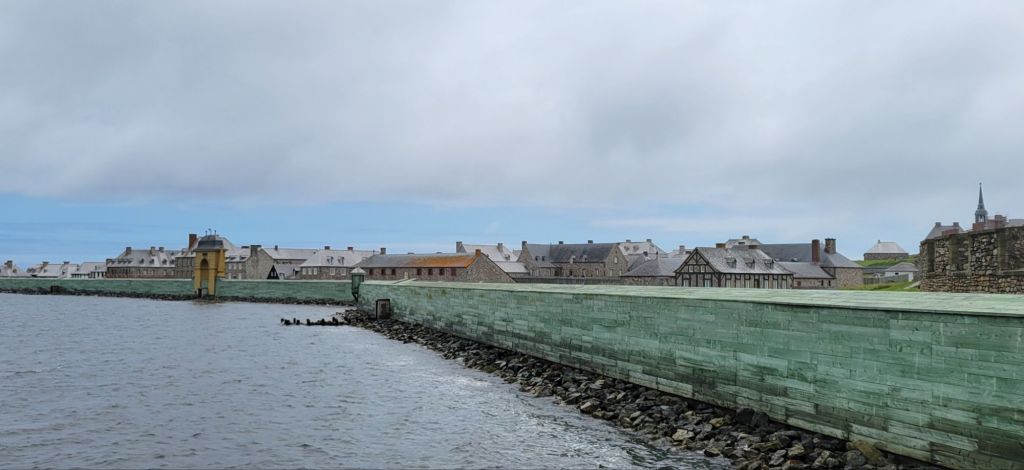
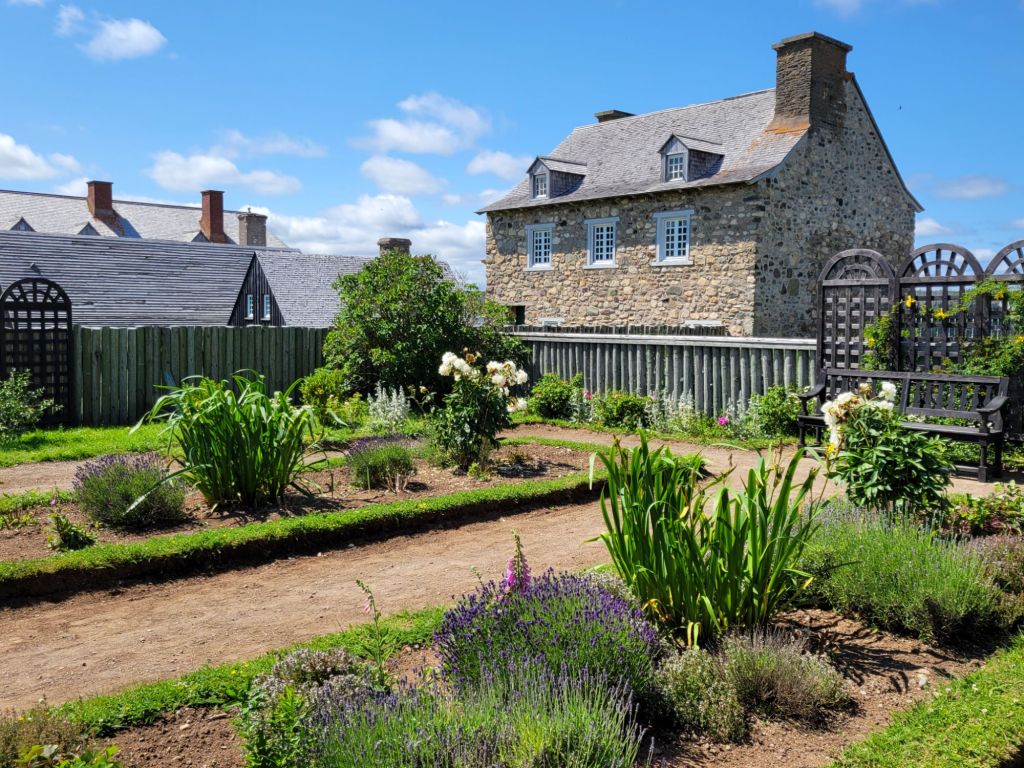
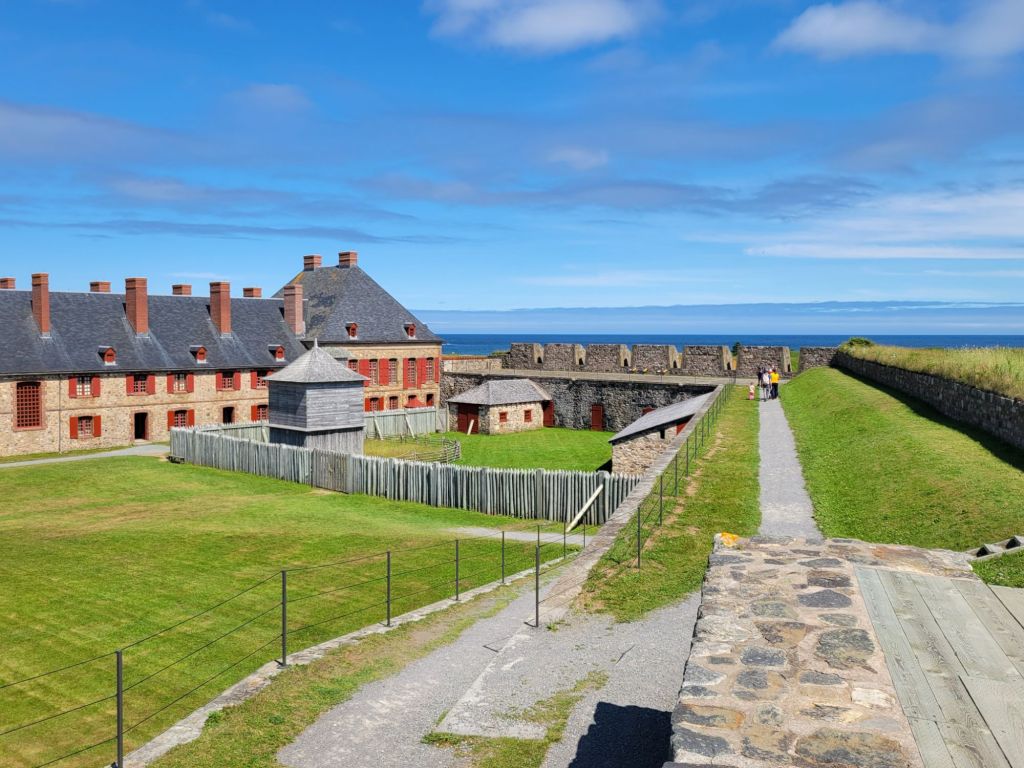
The fortress of Louisbourg is the largest historical reconstruction project on the Eastern Seaboard, possibly on the whole continent. It was amazing. It takes an entire day to go through. We didn’t even get to see everything.
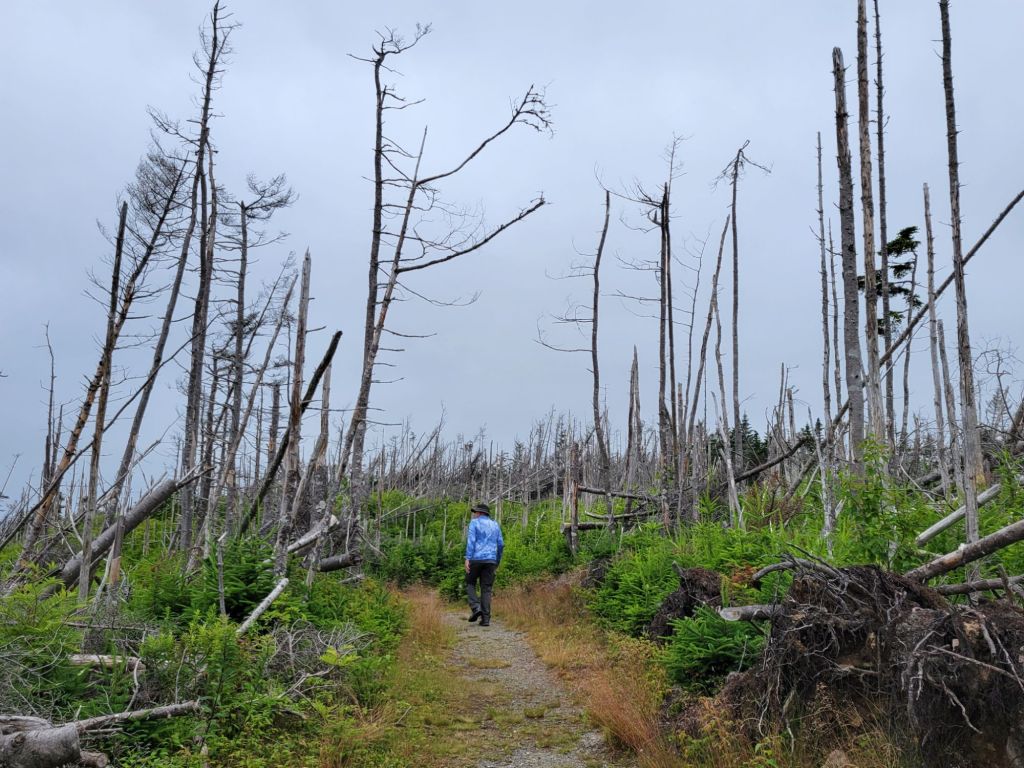
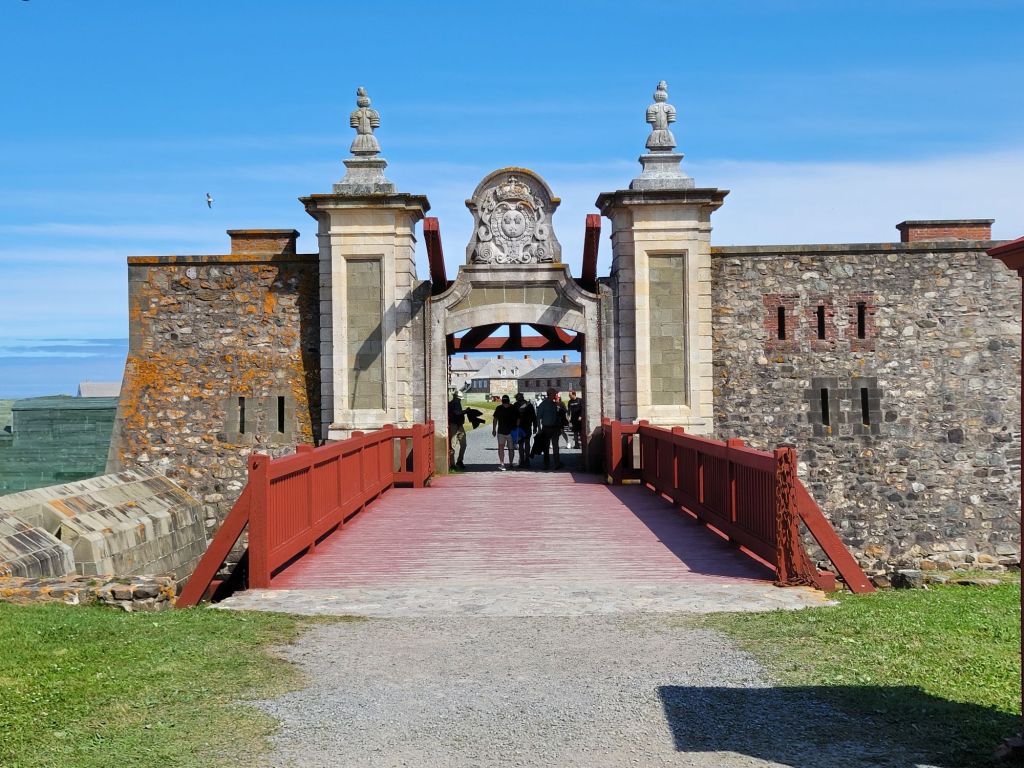
Walking from the parking lot to the visitor center was an eerie experience. A storm must have blown through this area sometime in the recent past. All of the trees were dead, and many of them were lying in the same direction.Heading into the fortressThe fortress is located on the eastern shore of Cape Breton
I’m probably going to post way too many pictures, but I was completely enthralled by this experience.
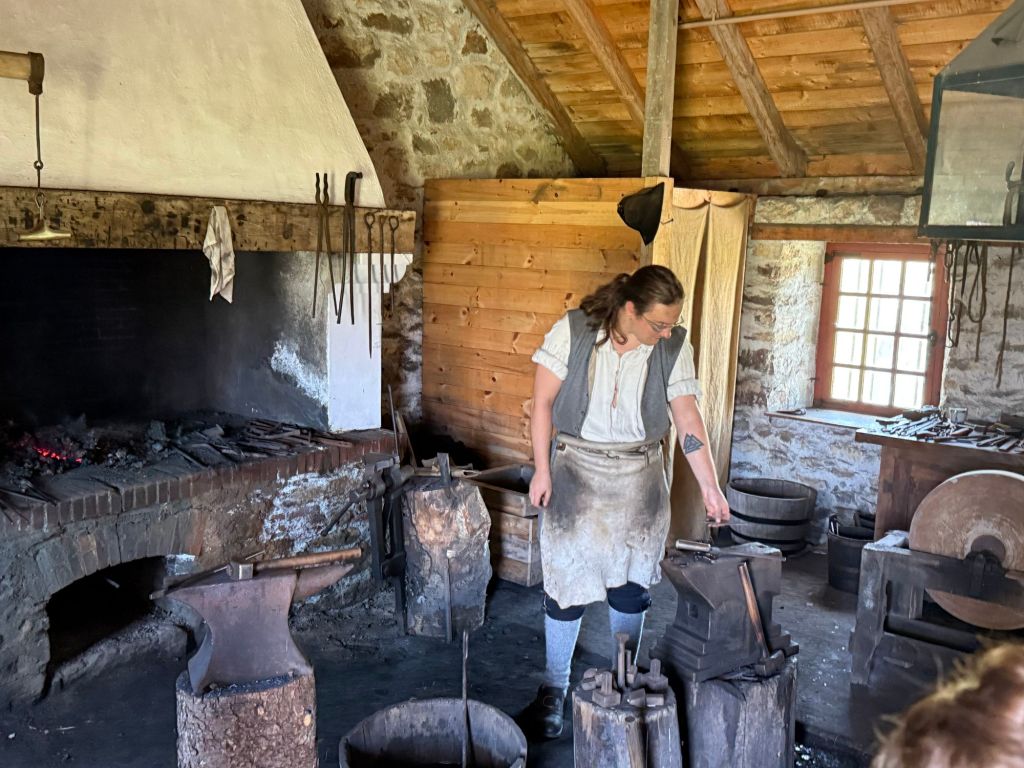
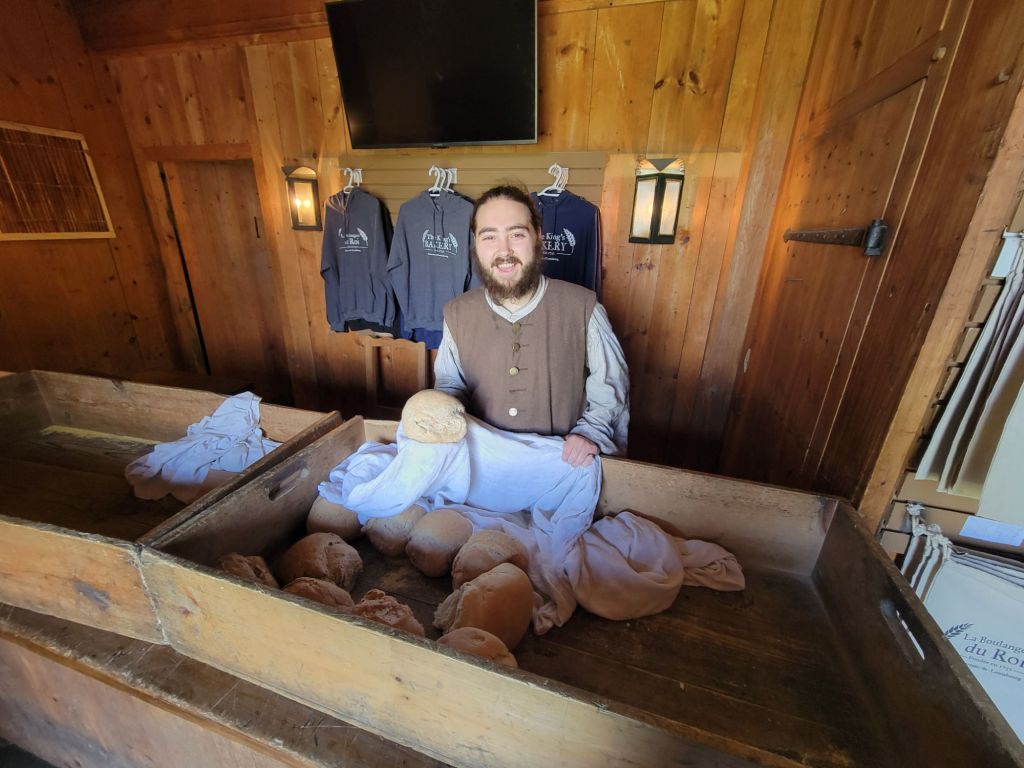
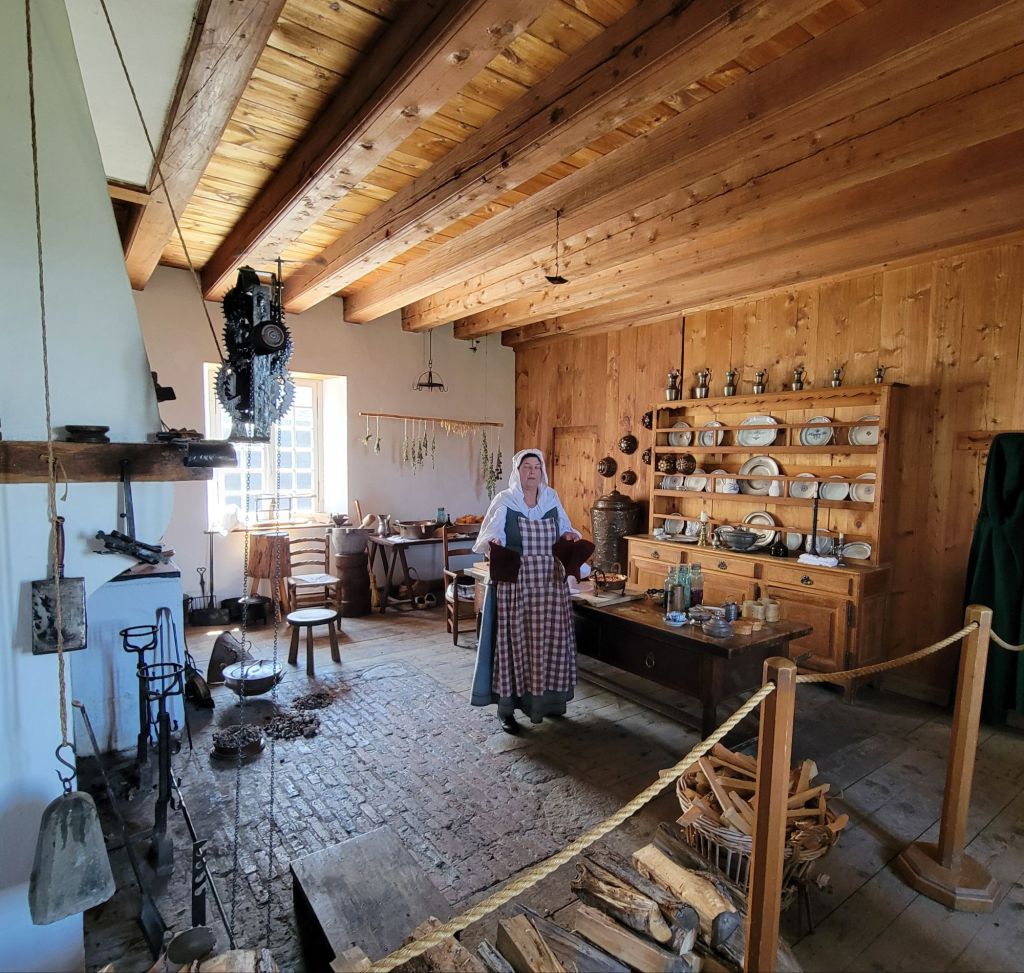
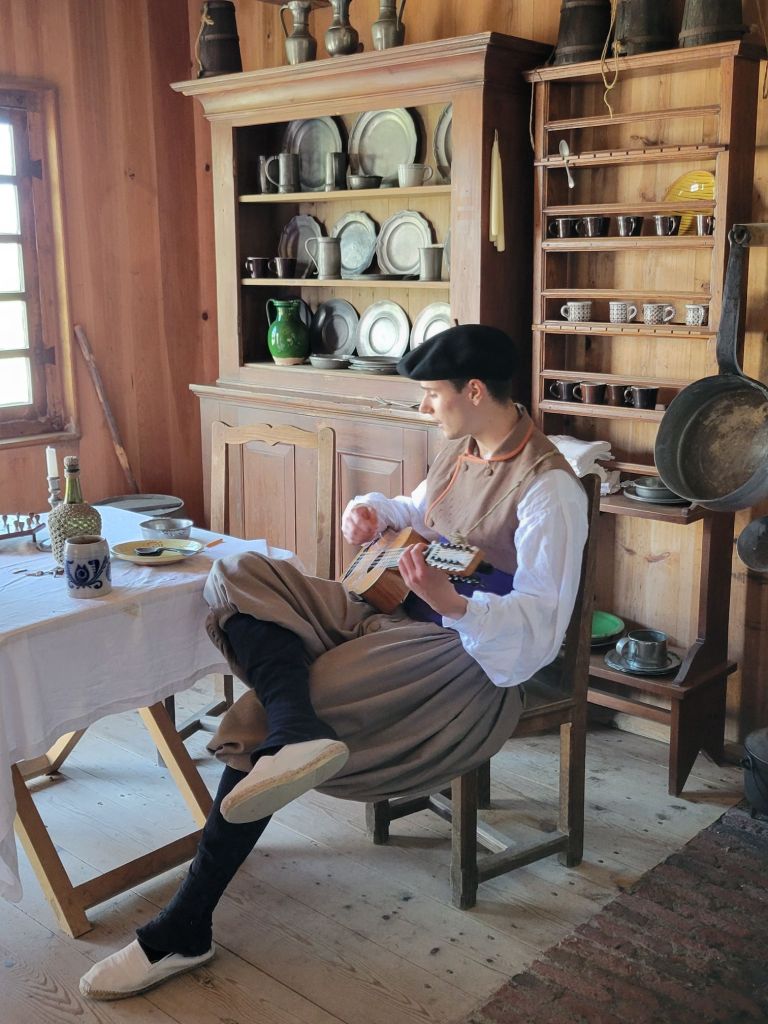
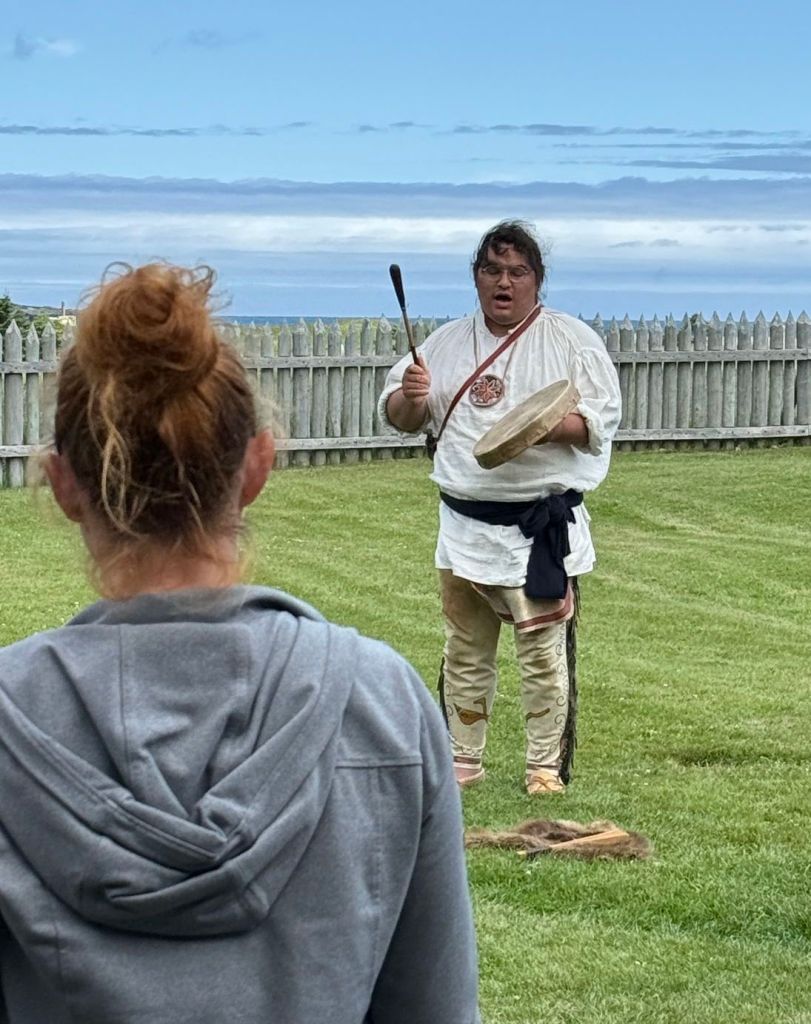
This fellow repaired metal hardware for the military. He was not allowed to create anything. Everything new had to come from France.This fellow was the baker. We bought one of his loaves of bread and had it for lunch because we had forgotten to bring our lunch from the car. It was still warm!This lady was the cook for the governor. She had just taken an apple crisp off the fire when we arrived. It was still bubbling.This young man was a native of the Basque region in Europe. He had a lovely accent and was so patient trying to explain the Basque language and culture to one of the other tourists. I didn’t know this, but the Basque language is the oldest language in Europe. It is completely different from French and Spanish, despite the fact that most of the Basque people live in either France or Spain.A member of the Mi’kmaq people did a presentation about the First Nation peoples of Cape Breton. Greg and I walked in at the end in time for the singing and drumming.
The Mi’kmaq people are native to Canada’s maritime provinces. Their name for Cape Breton is Unama’ki.
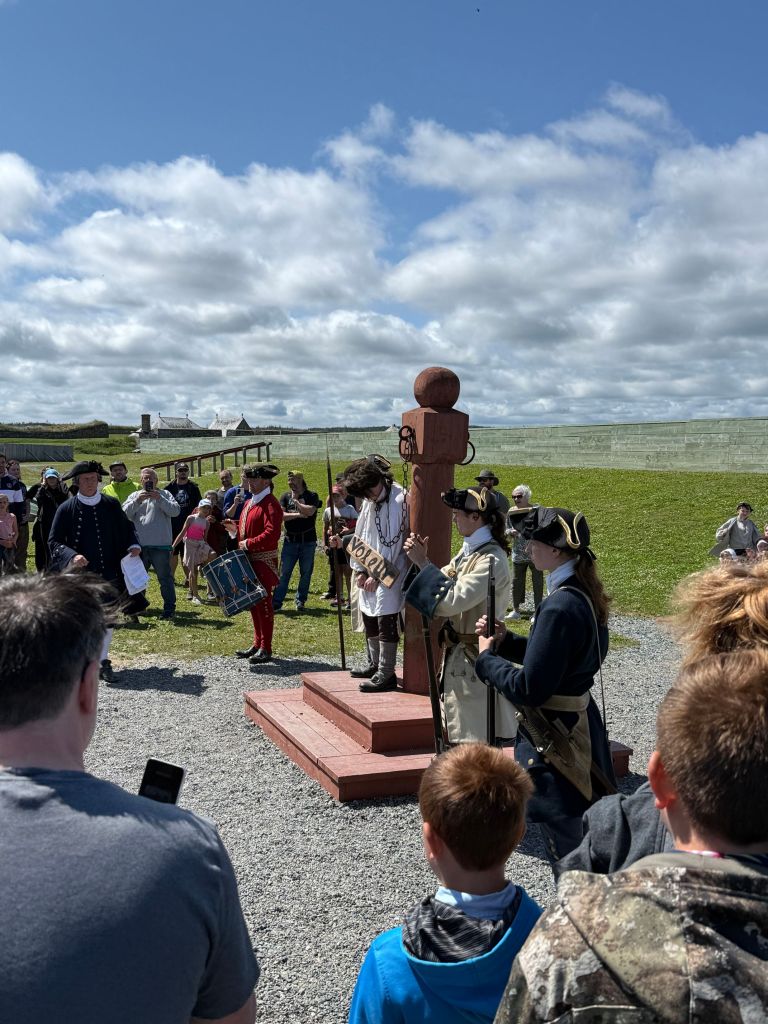
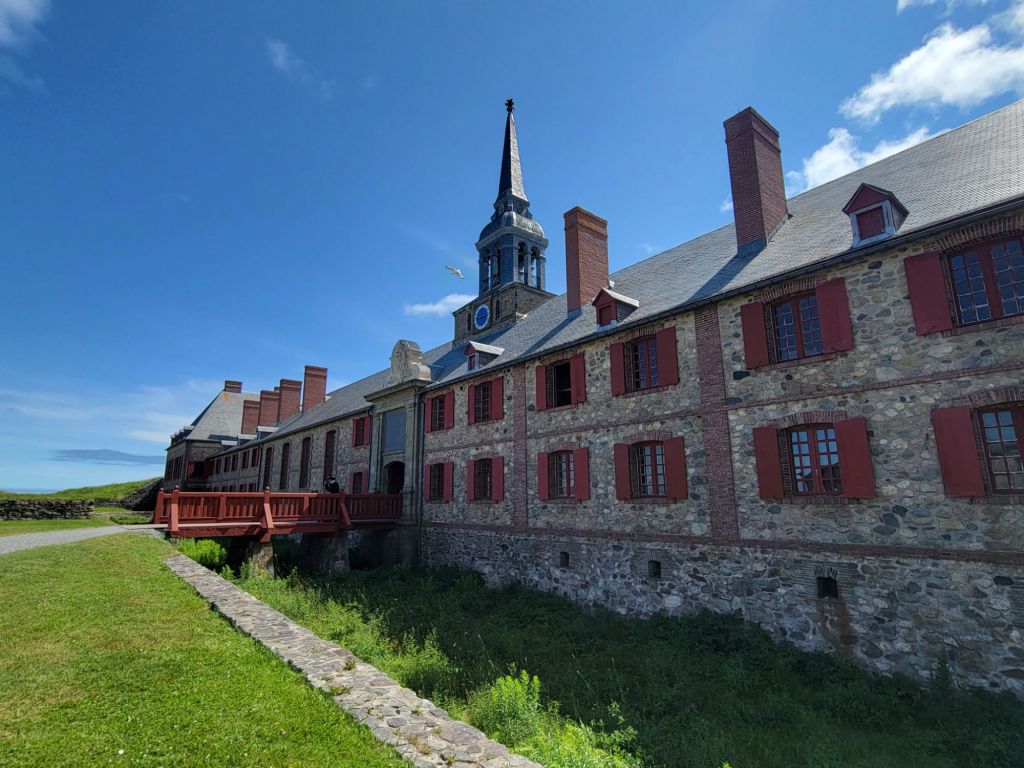
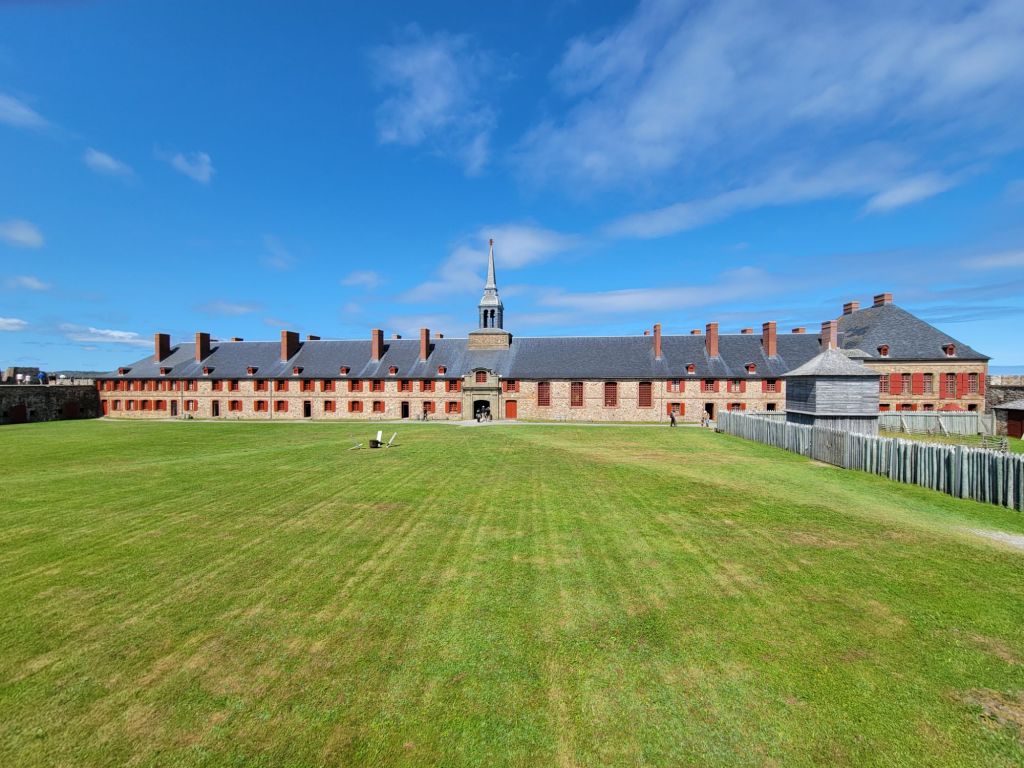
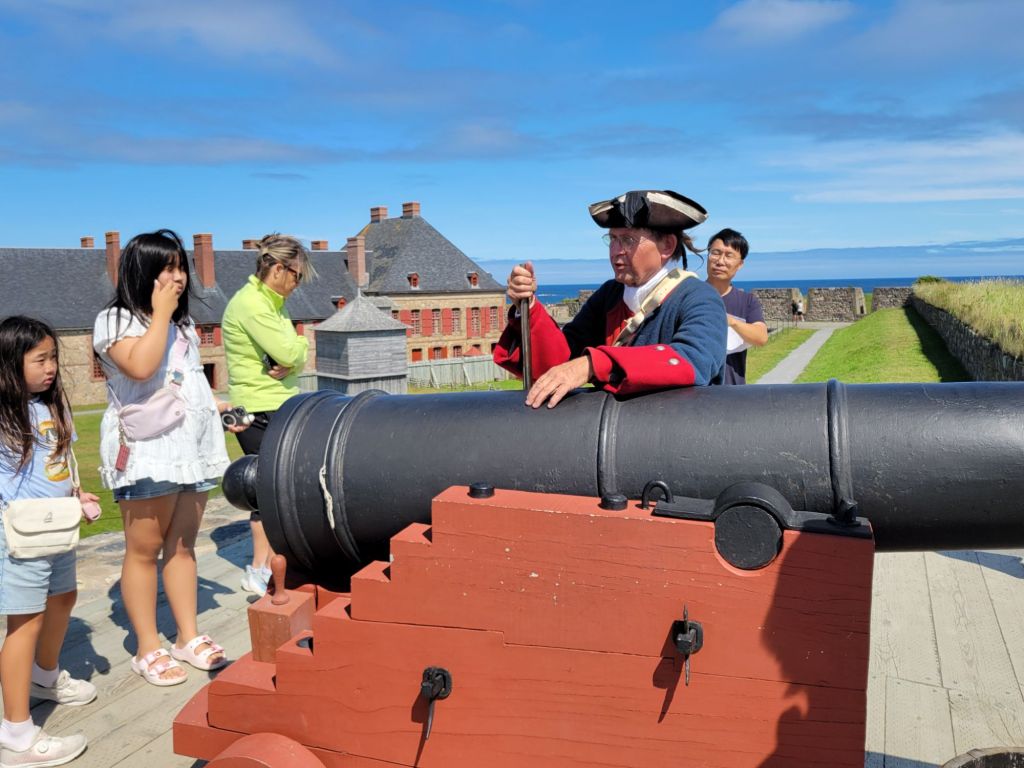
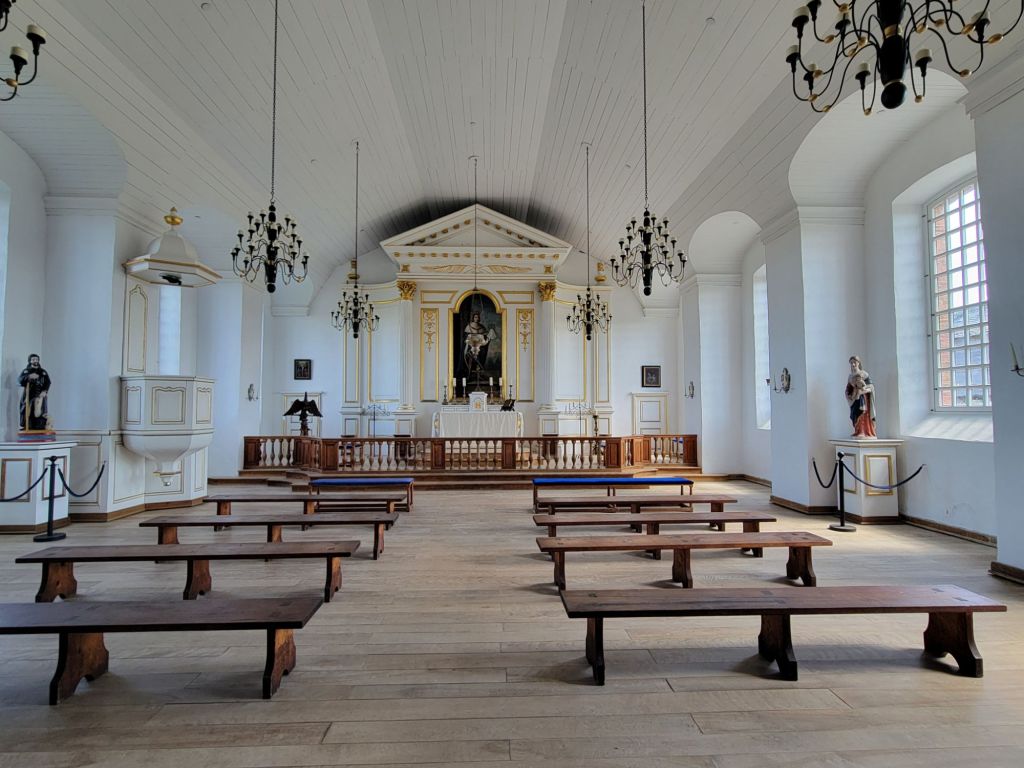
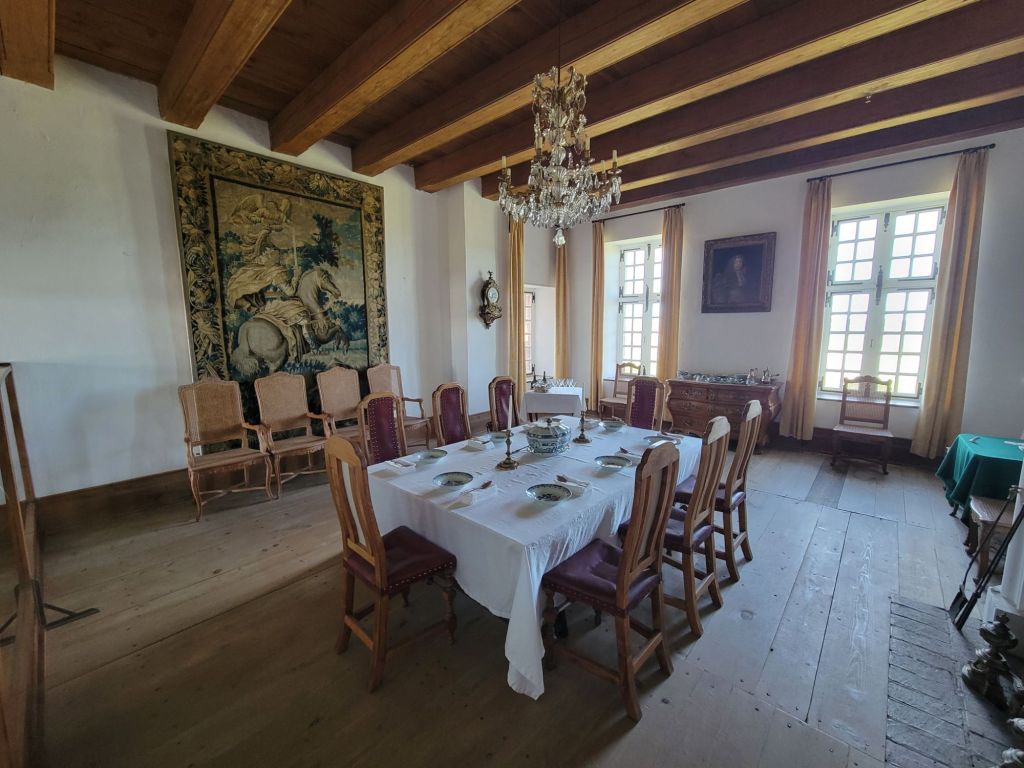
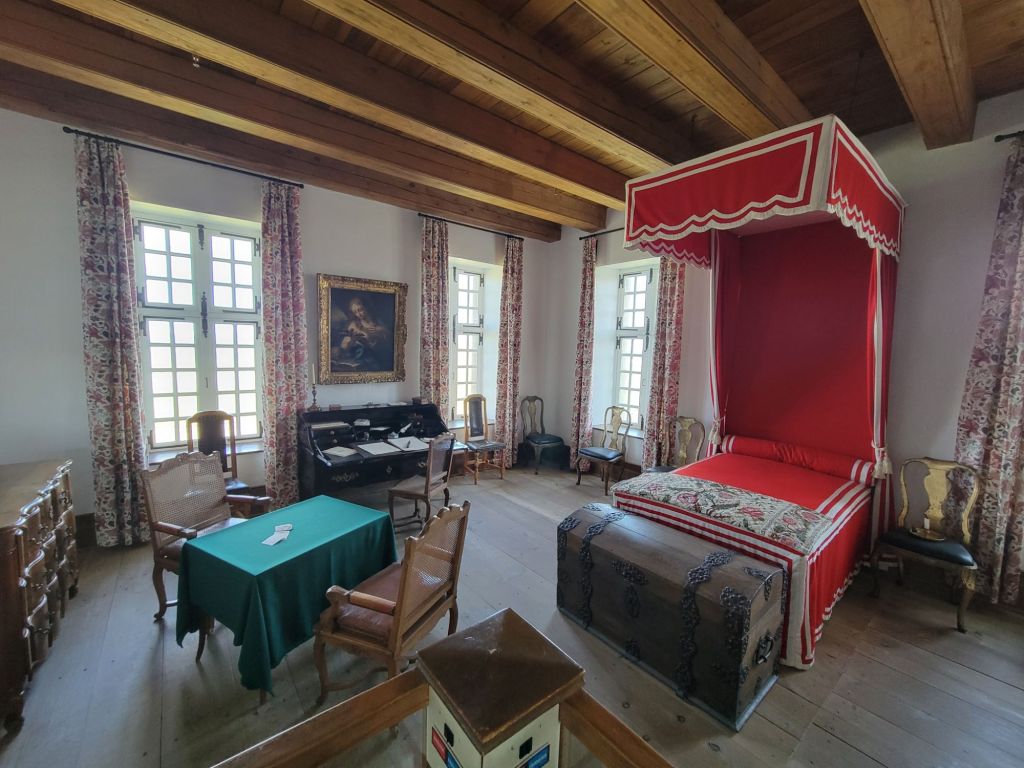
One of the colonists is suffering a public humiliation for some wrongdoing. The crowd was encouraged to yell insults at him.This photo shows the entrance to the Bastion of the King. On the left side is a chapel, and on the right side is the prison, some officers quarters, and the governor’s quarters.This photo shows the back of the Bastion of the King.This fellow explained some of the military fortifications, including the size of the cannons and how far they could shoot (a whole kilometer). The Fortress of Louisburg had some strategic weaknesses. Although it was easy to defend from the sea, it was easy to conquer from land.The chapel in the Bastion of the King.
Greg has some better photos of the streets, but unfortunately, cell service here is so bad that he’s been unable to send them to me.
It was a long day, but a great day. If my back hadn’t been hurting so much, we probably would have stayed longer.